Understanding Suit Fits: A Complete Guide to the Perfect Suit Fit for Men
A great suit can transform how a man looks and feels, but many men struggle with understanding suit fits. The difference between a sharp, confident appearance and an awkward outfit often comes down to fit, proportions, and proper tailoring.
Many men buy suits that are too loose, too tight, or poorly balanced simply because they do not know how a suit should actually fit. Learning understanding suit fits for men helps you choose the right jacket, trousers, and measurements so everything works together naturally.
The right hairstyle can elevate any outfit, so explore our Short Hairstyles for Men to find haircuts that complement your personal style
This guide breaks down the essentials of understanding suit fits, from jacket proportions to trouser length and tailoring adjustments. Whether you are buying your first suit, planning a wedding outfit, or upgrading your wardrobe, these practical insights will help you achieve a polished and confident style.
Understanding Suit Fits For Men
1. Classic Regular Fit Suit for Timeless Style
A regular fit suit is the traditional silhouette that offers balanced proportions and comfortable structure. The jacket sits naturally on the shoulders, the chest has moderate room, and the trousers fall straight without excessive tapering. Navy or charcoal versions work especially well for business settings.

For men who prefer comfort and timeless appeal, the regular fit suit remains a reliable option. It is ideal for office environments, formal meetings, or traditional wedding outfit men often wear. When choosing this style, make sure the jacket shoulders align perfectly and the sleeve ends slightly above the shirt cuff.
Best for: office, formal events, traditional wardrobes
2. Modern Slim Fit Suit for a Sharp Silhouette
Slim fit suits create a clean and modern appearance with a closer cut through the chest, waist, and trousers. Jackets are slightly tapered to follow the body, while the trousers narrow toward the ankle for a streamlined look.

This style works well for men who want a contemporary signature look without going overly tight. It is commonly used for weddings, formal dinners, and modern business attire. When comparing slim fit vs regular fit suit, the slim option delivers a sharper aesthetic while still maintaining comfort if properly sized.
Best for: modern offices, weddings, social events
3. Tailored Fit Suit for Balanced Elegance
Tailored fit sits between regular and slim. It provides structure without feeling restrictive, making it one of the most versatile suit types for men. The jacket follows the natural shape of the body while leaving enough room for movement.

This style is a favorite in bespoke tailoring because it offers the perfect balance between style and comfort. A tailored jacket paired with clean, tapered trousers creates a refined look suitable for business meetings or formal gatherings.
Best for: professional settings, business events
4. Structured Business Suit with a Tailored Jacket
A structured business suit focuses heavily on jacket shape. The shoulders should sit flat without dimples, while the waist slightly tapers to create a strong silhouette. Navy and grey fabrics are the most common for this professional style.

When considering how a suit should fit men, the jacket is the most critical element. A properly structured jacket improves posture and creates a confident presence. Pair it with leather shoes and a crisp dress shirt for a polished office look.
Best for: corporate environments, presentations
5. Wedding Tuxedo With Proper Tuxedo Fit
A tuxedo requires slightly different proportions than a standard suit. The jacket usually has satin lapels, and the trousers feature a cleaner, uninterrupted line without cuffs. A proper tuxedo fit should look sleek and formal without appearing tight.

When planning tuxedo fitting for a wedding outfit men typically wear, focus on jacket length and trouser break. The jacket should cover the seat while the trousers fall neatly over formal shoes with minimal fabric stacking.
Best for: weddings, black tie events
6. Smart Casual Suit With Sport Coat Styling
A relaxed suit can easily transition into smart casual outfits by pairing suit trousers with a sport coat outfit. A textured jacket, lightweight trousers, and minimal accessories create a relaxed but refined appearance.

This style works well for dinners, social gatherings, or semi-formal events where a full suit may feel too formal. A well-fitted sport coat keeps the outfit polished while allowing more flexibility in color and fabric choices.
Best for: smart casual events, dinner dates
7. Minimalist Monochrome Suit Look
Minimalist fashion focuses on clean silhouettes and neutral colors. A monochrome suit, such as charcoal paired with a black shirt, creates a sleek and modern appearance.

For men building a capsule wardrobe, this style offers maximum versatility. A well-fitted monochrome suit can transition easily from professional settings to evening events simply by adjusting shoes or accessories.
Best for: minimalist wardrobes, evening events
8. Summer Lightweight Suit with Relaxed Fit
Warm weather requires lighter fabrics and slightly relaxed tailoring. Linen or lightweight wool suits allow better airflow while maintaining a clean silhouette.

In summer outfits, the jacket should remain structured but breathable. When considering how should mens suit pants fit, they should taper slightly but remain comfortable for movement during warm conditions.
Best for: summer weddings, outdoor events
9. Double Breasted Suit for Classic Authority
Double breasted suits feature overlapping front panels and strong lapels that create a bold silhouette. This style emphasizes chest width and shoulder structure.

The key to wearing a double breasted suit well is maintaining proper proportions. The jacket must fit perfectly at the waist to avoid looking bulky. When tailored correctly, this suit type projects confidence and authority.
Best for: formal occasions, statement style
10. Textured Suit with Layered Styling
Textured fabrics like tweed or flannel add depth and visual interest to a suit. Pairing textured suits with subtle layering elements such as knit ties or waistcoats enhances the overall look.

This outfit variation works particularly well during colder seasons. A textured suit combined with proper layering creates a sophisticated aesthetic that stands out while still remaining elegant.
Best for: fall and winter styling
11. Luxury-Inspired Bespoke Suit
Bespoke tailoring represents the highest level of suit fitting guide for men. Every measurement is customized to match the wearer’s proportions, ensuring the jacket, sleeves, and trousers align perfectly.

For men who want a refined signature look, bespoke suits offer unmatched precision. Learning how to measure for a suit men properly ensures the final garment enhances body shape and movement.
Best for: luxury wardrobes, special occasions
12. Casual Suit with Modern Proportions
Modern suits often blend formal tailoring with relaxed elements. Slightly cropped trousers, soft shoulder construction, and lighter fabrics create a versatile everyday suit.

This variation works well for creative professionals and modern workplaces. It also pairs nicely with minimalist sneakers or loafers, creating a stylish yet approachable outfit.
Best for: modern workplaces, social settings
How to Build a Stylish Men’s Wardrobe Without Overbuying
Building a strong wardrobe does not require dozens of suits. A strategic approach ensures versatility and style without unnecessary purchases.
Start with a capsule wardrobe mindset. Focus on timeless pieces such as navy and charcoal suits that work for multiple occasions. Neutral colors allow you to mix and match shirts, ties, and shoes effortlessly.
Fit should always take priority over quantity. A well-fitted suit looks significantly better than several poorly fitted ones. Investing in basic tailoring adjustments can dramatically improve the overall appearance.
Choose versatile fabrics that work across seasons. Lightweight wool suits, for example, can be worn throughout the year.
Pay attention to color coordination. Neutral palettes make it easier to combine different clothing pieces without clashing.
Accessories should remain minimal and refined. A classic watch, leather belt, and polished shoes complete the look without overwhelming it.
Explore our guide on Minimalist Men’s Fashion for a cleaner wardrobe approach.
See our Smart Casual Outfit ideas for more refined everyday looks.
Best Color Combinations for Modern Men’s Fashion
Color coordination plays a major role in achieving a polished suit look.
Black and white combinations create a sharp minimalist appearance that works well for formal events. This pairing is timeless and highly versatile.
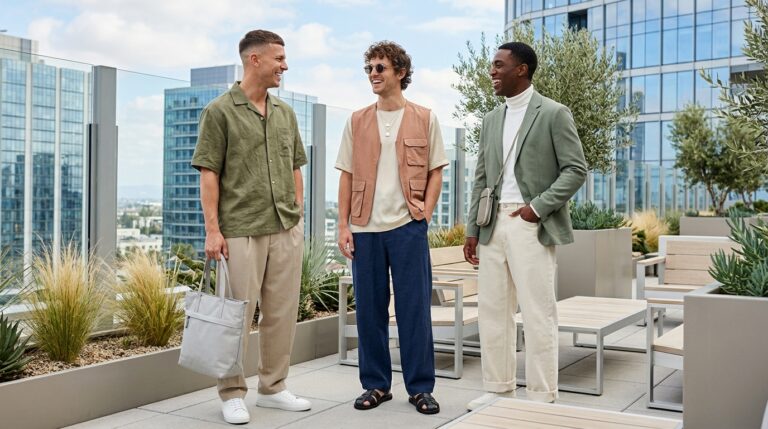
Beige and brown tones represent the classic old money aesthetic. These shades work particularly well in summer suits or relaxed tailoring.
Navy and grey remain staples for smart casual and business outfits. The contrast creates a professional yet approachable appearance.
Monochrome neutral outfits, such as all grey or all navy, provide a clean and modern style that photographs well and works across seasons.
Earth tone palettes, including olive, brown, and tan, offer a more relaxed but stylish alternative to traditional suit colors.
Essential Pieces Every Stylish Man Should Own
A strong wardrobe foundation makes styling suits easier. Every modern man should own a few essential items that complement tailored clothing.
- White dress shirt
- Navy suit
- Charcoal suit
- Tailored trousers
- White minimalist sneakers
- Brown leather dress shoes
- Classic leather belt
- Neutral overcoat
- Minimalist watch
- Structured blazer or sport coat
These timeless pieces create the backbone of a functional wardrobe and make it easier to maintain a perfect suit fit across multiple outfits.
For more timeless essentials, check our capsule wardrobe guide for men’s style foundations.