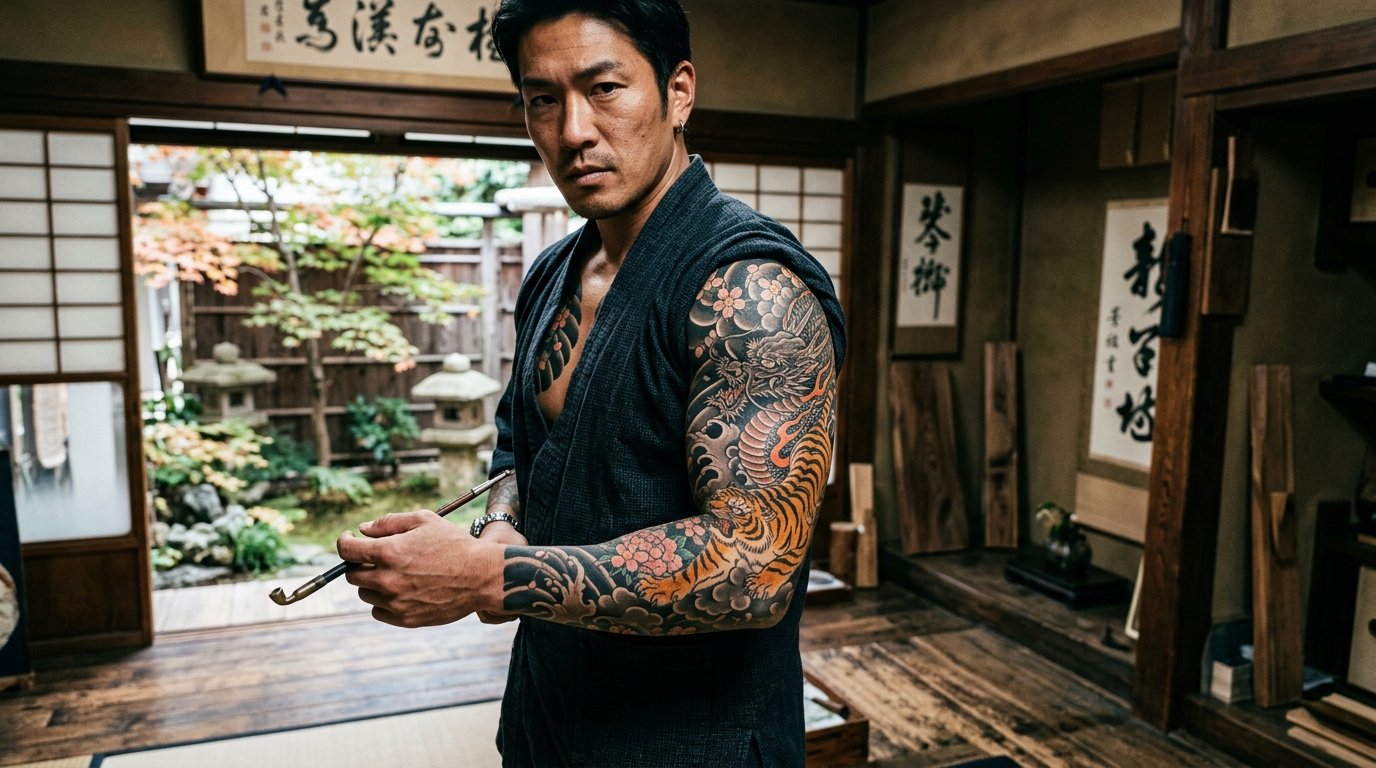
17 Japanese Sleeve Tattoos That Turn Traditional Irezumi Into Living Art
Japanese sleeve tattoos can feel overwhelming to choose because the tradition runs deep, the symbolism matters, and one wrong composition choice can make a full arm feel crowded instead of cohesive. Between dragons, koi, florals, clouds, masks, and black-grey or saturated color work, style alignment matters as much as the subject itself, especially when building a sleeve meant to age with power.
Before getting inked, it helps to review Black and Grey Half Sleeve Tattoofor long-term satisfaction.
This guide breaks down 17 visually distinct japanese sleeve tattoos, from Tebori-inspired body suits to black and red dragon compositions and modern Nissaco-influenced pieces. You’ll find placement direction, style contrasts, and practical considerations drawn from real tattoo aesthetics, not generic trend lists. If you are planning a sleeve starter or full commitment piece, the strongest ideas begin below.
Japanese Sleeve Tattoos
1. Crimson Yakuza Dragon Coiling Through Storm Clouds
Heavy traditional linework pushes a serpentine dragon diagonally across the arm, with scales packed in red saturation and charcoal wind bars breaking the negative space. The composition feels alive because the body coils around the arm’s natural rotation. It carries the force associated with Yakuza Dragon Tattoo Japanese Style, but with balanced ornamental restraint.
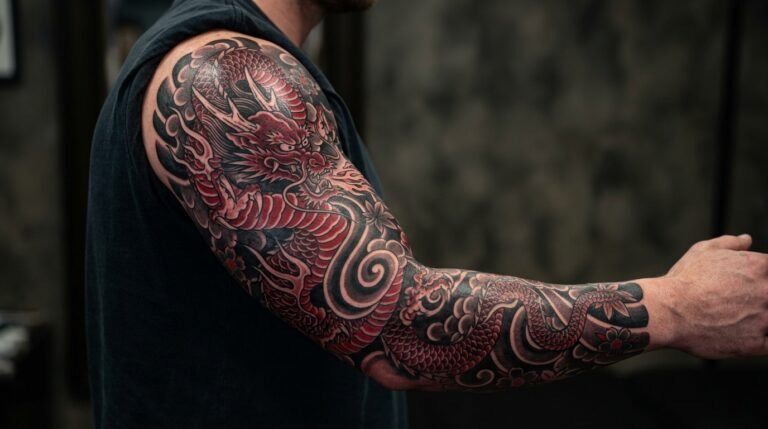
Best placed as a full upper-arm-to-wrist composition where movement wraps naturally with the anatomy. Strong for experienced collectors or anyone building a Dragon Tattoo Full Sleeve. Moderate to intense pain through inner arm zones. Cloud bands or peonies can expand it into a broader Japanese Dragon Tattoo Sleeve For Men.
Best for: Full sleeve | Bold personality | Statement collector piece
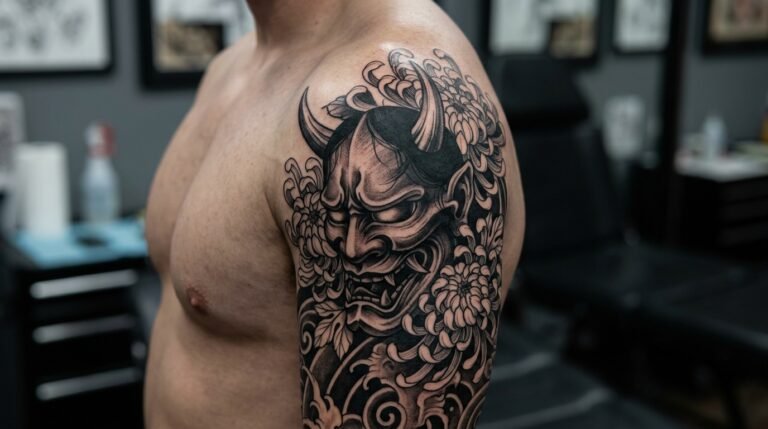
2. Black work Oni Mask With Chrysanthemum Framing
Dense black shading gives the demon mask sculptural depth while chrysanthemum petals soften the aggression. Thick brush-like black fills contrast with carved highlights, giving the piece the weight seen in Black Japanese Tattoo Sleeve work. It reads dramatic from distance, intricate up close.
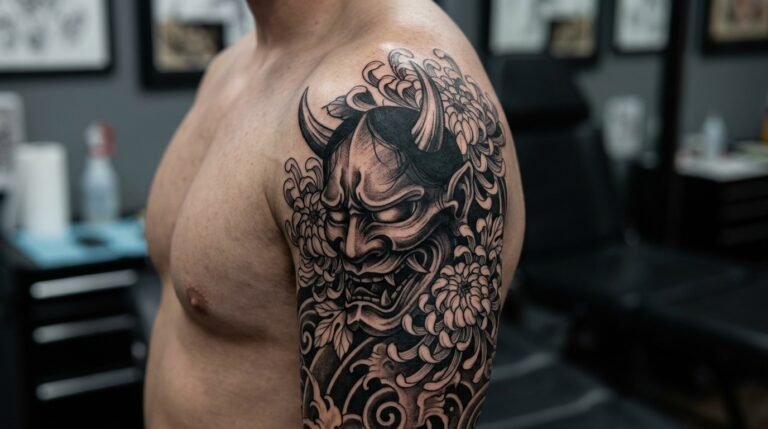
The upper arm suits the rounded Oni composition especially well, allowing natural framing around deltoid contours. Excellent for someone wanting Black Grey Japanese Tattoo energy without full color commitment. Pain is manageable aside from outer shoulder edge. Can merge into a larger Japanese Black Sleeve Tattoo later.
Best for: Upper arm | Strong visual personality | Sleeve starter
3. Sacred Geometry Dragon Spine in Dot Precision
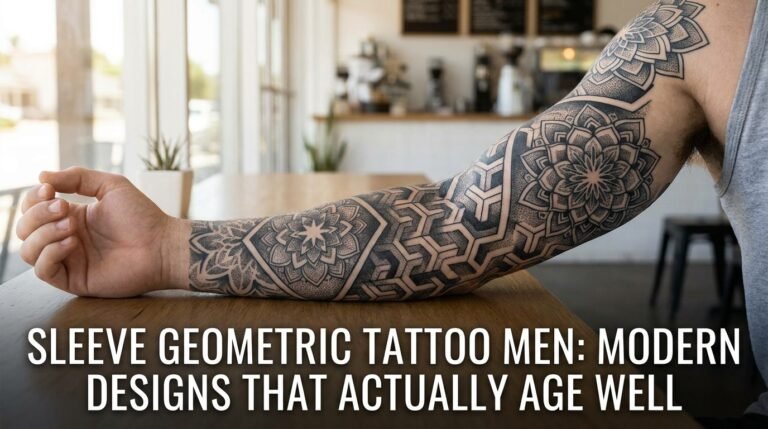
This approach strips the dragon into angular forms, sacred geometry grids, and dot-shaded scale textures. Instead of classic Irezumi curves, the structure feels architectural. Negative space is deliberate, giving a rarer contemporary take on Japanese Pattern Tattoo Sleeve aesthetics.
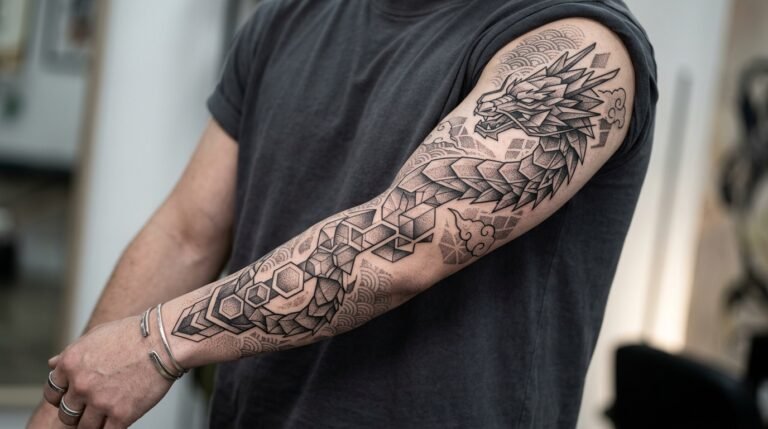
Works best wrapping forearm to bicep where geometry can follow muscle flow cleanly. Strong for someone who loves Japanese symbolism but wants less traditional execution. Pain is lighter due to open-space composition. Can be extended with wave matrices or a Japanese Cloud Sleeve backdrop.
Best for: Forearm sleeve | Design-focused personalities | Modern collector
4. Tebori Koi and Maple Leaves in Hand-Poked Texture
There is a softness unique to Tebori Sleeve work, where shading seems breathed into skin rather than machine-packed. A koi rises through floating maple leaves, while muted oranges and moss greens create a lived-in surface typical of older Japanese Tattoo Art Color.
A full sleeve placement suits this because hand-poked transitions need room. Ideal for collectors drawn to authentic Japanese Irezumi Sleeve traditions. Sessions can be demanding due to Tebori pacing. Add water bars or lotus motifs to evolve into Japanese Full Sleeve Tattoos.
Best for: Full arm | Traditional purist | Legacy tattoo project
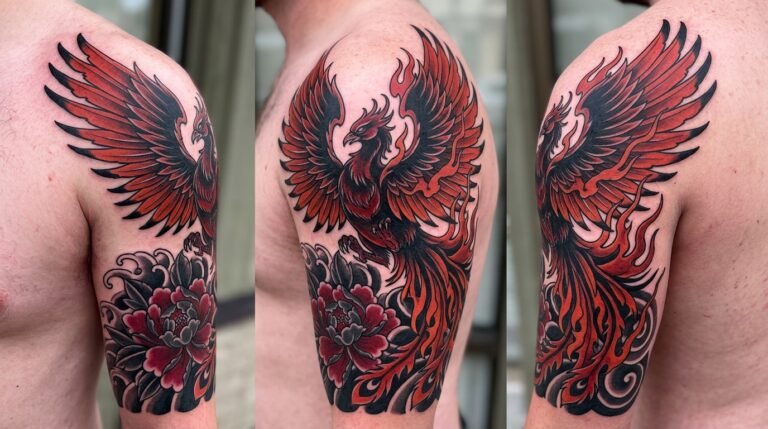
5. Neo-Traditional Phoenix With Black and Red Flame Wings
Rich vermillion wings edged in heavy black create a dramatic Black And Red Japanese Sleeve composition. Feather forms are stylized rather than realistic, with flame motifs sweeping the arm vertically. It carries neo-traditional punch while nodding to Japanese mythic symbolism.
Strong across shoulder and upper arm where wings can open with anatomy. Good for someone wanting vivid Mens Color Tattoo Sleeve impact. Shoulder packing can be spicy but manageable. Pair with peonies for more Japanese Tattoo Color richness.
Best for: Shoulder cap sleeve | Expressive personality | Visible statement
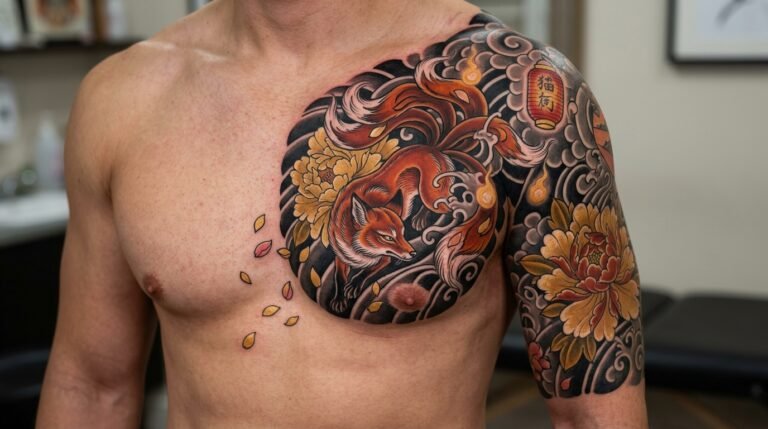
6. Kitsune With Gold Peony Drift
Illustrative line control makes the fox feel agile rather than aggressive, while gold-toned peonies soften the flow. Fur textures, wind bars, and drifting petals create a cinematic movement common in brighter Japanese Style Floral Tattoo compositions.
The chest to upper arm transition suits this beautifully, especially if inspired by Japanese Dragon Tattoo Chest To Arm layouts. Great for wearers wanting mythology without heavier dragon imagery. Sternum edges can sting briefly. Add clouds or lanterns for custom storytelling.
Best for: Chest extension | Symbolic personalities | Collector’s centerpiece
7. Mandala Wave Sleeve With Dotwork Foam
Ocean waves break into mandala geometry through stippled foam textures, creating a meditative reinterpretation of Japanese Cloud Sleeve Tattoo rhythms. The visual density feels ornate without overcrowding because dotwork breathes.
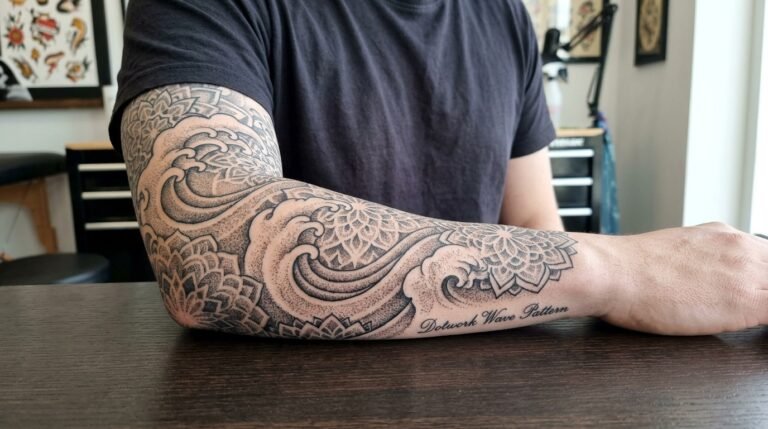
Excellent on the forearm where repeating circular geometry aligns well. Strong option for first-time sleeve wearers wanting subtlety. Pain is moderate and consistent. Can transition into Black And White Japanese Tattoo Sleeve expansions easily.
Best for: Forearm | Detail lovers | First sleeve project
8. Abstract Brushstroke Samurai Armor Fragments
This feels almost painted onto skin. Armor plates dissolve into sumi-style brush smears and fractured black textures. It leans abstract but still rooted in Japanese martial iconography, closer to avant-garde Nissaco Tattoo influences.
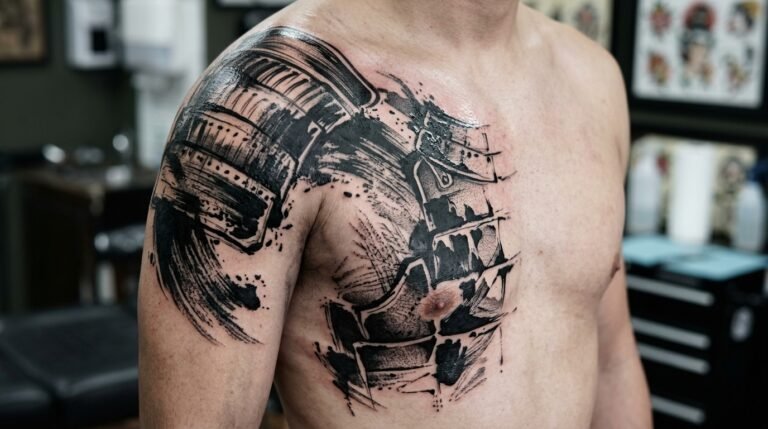
The shoulder and rib transition works well because abstract flow benefits from body motion. Ideal for experienced tattoo collectors. Rib pain is sharper but brief in passes. Can integrate smoke or kanji fragments for customization.
Best for: Shoulder-rib flow | Experimental personality | Collector piece
9. Hyper-Real Hannya Emerging From Smoke
Rendered almost sculpturally, the Hannya mask carries polished horn reflections, smoky transitions, and skin-like tonal depth. It bridges realism with Traditional Japanese Dragon Tattoo Sleeve drama through dramatic contrast.
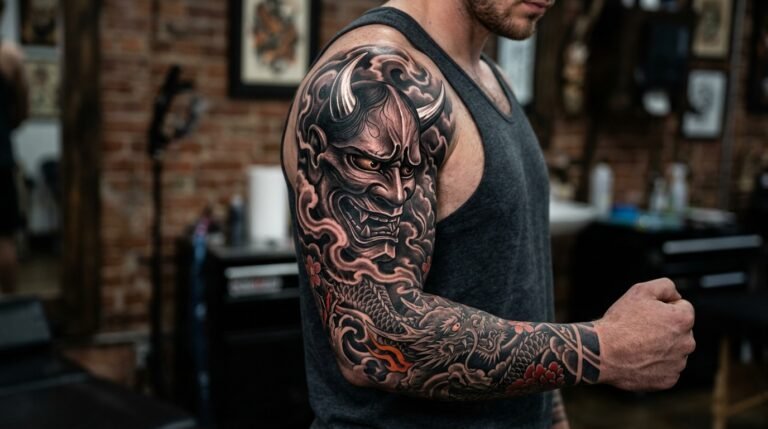
Best on upper arm into forearm where realism gets enough room to breathe. Suits someone wanting darker emotional symbolism. Inner elbow may be intense. Add floral framing or clouds to move toward a full Japanese Full Sleeve Tattoo.
Best for: Upper arm realism | Bold personalities | Statement sleeve
10. Peony and Crane Flow in Bright Irezumi Color
This is pure Bright Japanese Tattoo energy. Saturated crimson peonies, ivory cranes, and blue wind bars create a classic high-color balance. The sleeve reads ornate and elegant rather than heavy.
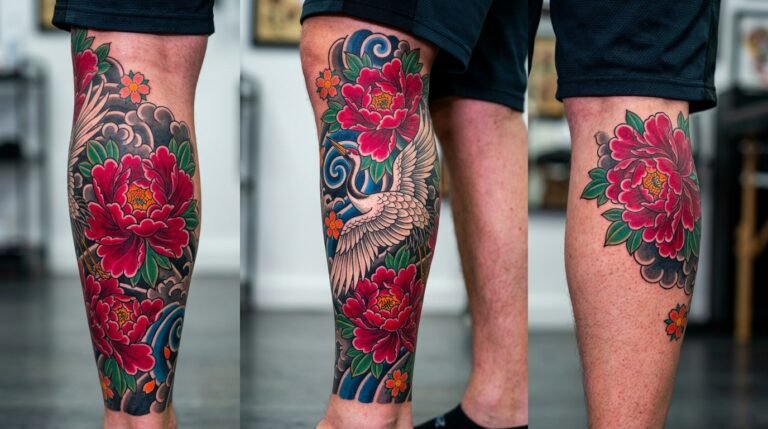
Calf sleeves surprisingly suit this exceptionally well because vertical crane forms elongate the leg. Great option for someone exploring Japanese Flower Leg Sleeve Tattoo themes. Calf discomfort is manageable. Works beautifully as a color-rich expansion piece.
Best for: Calf sleeve | Color enthusiasts | Artistic collector
11. Black Grey Dragon Wrapped in Storm Bars
Soft grey wash scales and black cloud bars give this Black Grey Japanese Tattoo a quieter menace than bright dragon sleeves. The dragon coils in layered depth without relying on color.
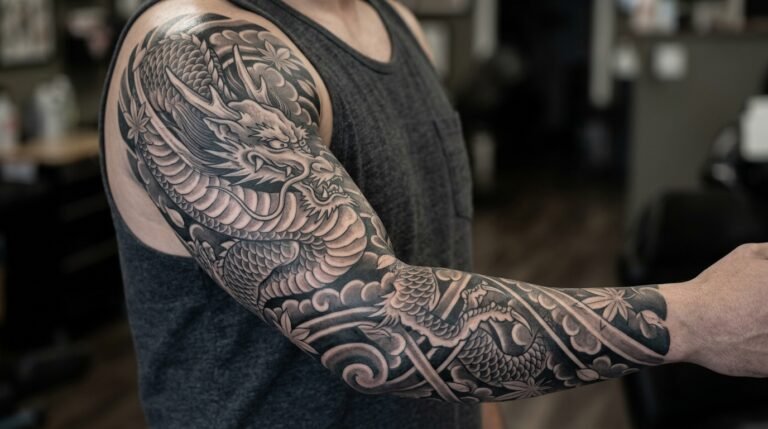
Forearm-to-bicep works especially well for Dragon Tattoo Men Arm Japanese Sleeve styling. Excellent for someone wanting classic symbolism with subdued palette. Moderate pain through ditch zones. Can become a full Black Japanese Tattoo Sleeve over time.
Best for: Arm sleeve | Minimal-bold hybrid | Long-term project
12. Female Warrior Irezumi With Lotus Armor
A striking nod to Japanese Traditional Tattoo Woman aesthetics, this composition centers an armored female warrior framed by lotus blooms and smoke. Fine facial rendering contrasts beautifully with heavier ornamental framing.
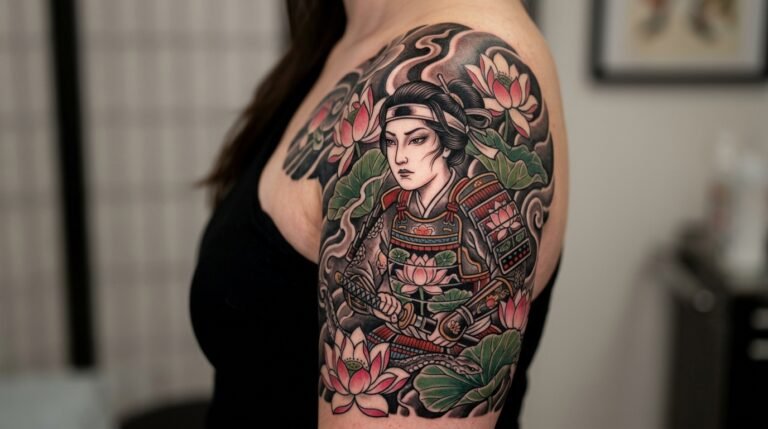
Best placed across upper arm and shoulder cap for portrait balance. Also aligns with Female Traditional Japanese Tattoo collectors seeking strong narrative imagery. Outer shoulder is manageable. Lotus or snakes add further symbolism.
Best for: Upper arm portrait | Narrative collectors | Signature piece
13. Black and White Koi Against Wind Bars
Pure monochrome gives the koi a raw timelessness. Heavy outlines, white highlights, and wind bars make it feel carved. It captures the strength of Black And White Japanese Tattoo Sleeve traditions with disciplined restraint.
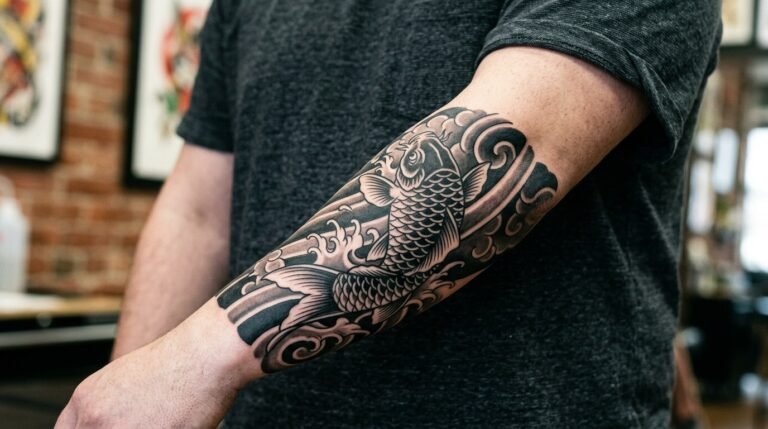
Forearm placement enhances the koi’s directional motion. Great for first-time collectors wanting meaningful imagery. Pain is moderate. Easy to extend into Japanese Cloud Sleeve backgrounds later.
Best for: Forearm | Symbolic personalities | Sleeve foundation
14. Nissaco-Inspired Experimental Color Fragment Sleeve
Strong references to Nissaco Tattoos appear in fractured motifs, saturated color disruptions, and deconstructed traditional imagery. Dragons, masks, and florals feel sliced and reassembled into contemporary art.
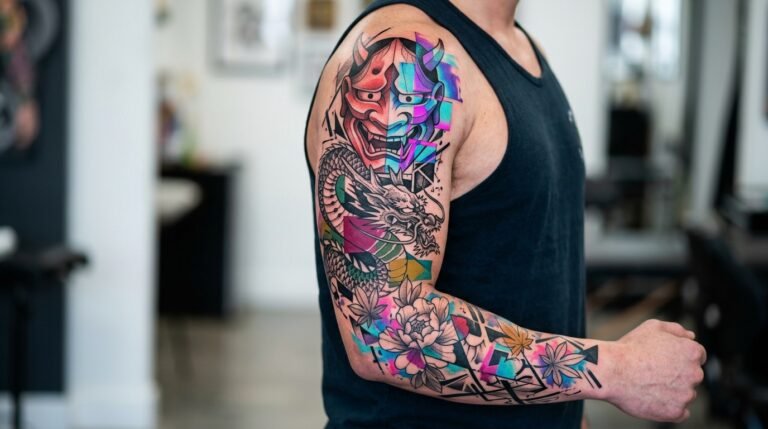
Full sleeve only. It needs uninterrupted canvas. Best for serious collectors wanting gallery-level tattooing. Sessions are long and demanding. Can include cover-up adaptation, making it strong for Irezumi Cover Up Tattoo possibilities.
Best for: Full sleeve | Advanced collectors | Art-driven commitment
15. Japanese Cloud Sleeve With Floating Lightning Veins
Cloud masses become the entire subject here, with lightning splitting through smoke curls. It transforms Japanese Cloud Sleeve Tattoo motifs into the focal point rather than filler.
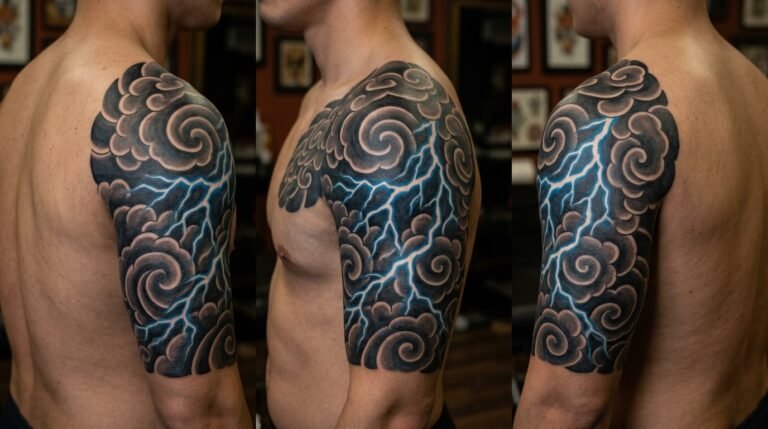
Shoulder through upper arm suits swirling cloud masses perfectly. Strong for those wanting Japanese symbolism without creatures or portraits. Pain is mild to moderate. Can later host dragons or tigers within the cloud field.
Best for: Shoulder sleeve | Minimal myth lovers | Expansion-ready design
16. Floral Dragon Half Sleeve With Peony Drift
A compact but rich Japanese Dragon Half Sleeve Tattoo, this design balances dragon head intensity with layered peonies and wave bars. It feels dense without becoming visually heavy.
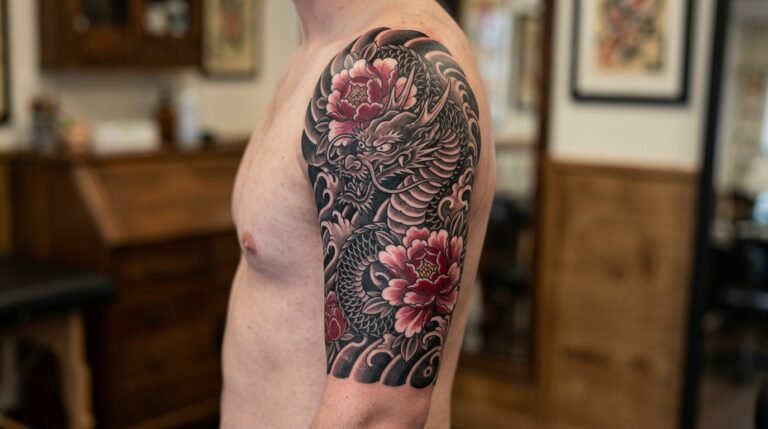
Perfect for half-sleeve commitment before moving to full Full Japanese Sleeve Tattoo territory. Good for those uncertain about full-arm coverage. Outer arm pain is approachable. Scale color can be muted or vivid.
Best for: Half sleeve | First major tattoo | Transitional piece
17. Cover-Up Irezumi Tiger Over Blackout Base
A tiger breaks through previous blackout fields using layered orange, cream, and black patterning. It shows why Irezumi Cover Up Tattoo work succeeds when bold motifs overpower old ink through composition rather than concealment tricks.
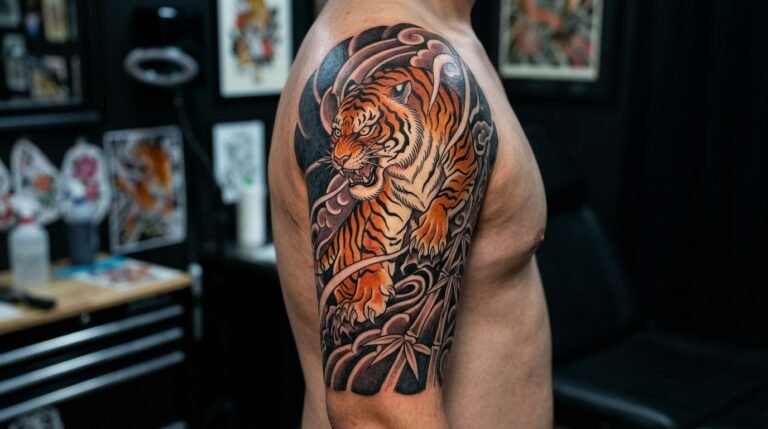
Upper arm and shoulder offer the best cover-up real estate. Best handled by experienced collectors with specialist artists. Sessions can be demanding due to layered work. Clouds and bamboo can extend it into a full sleeve narrative.
Best for: Cover-up sleeve | Experienced wearer | Reinvention piece
How to Choose the Right Tattoo Style for Your Personality
If you lean restrained and detail-obsessed, fine line or softer Tebori-driven Japanese sleeve tattoos often suit you best. A hand-poked koi sleeve or subtle black-grey dragon reads personal rather than confrontational. These styles age beautifully when spacing is respected.
If your aesthetic is louder, traditional and blackwork sleeves carry unmatched authority. Think Oni masks, Yakuza dragons, or black-and-red phoenix compositions. These suit confident personalities drawn to strong silhouettes and heavy visual presence.
Geometric or abstract Japanese interpretations work well for design-minded people who want symbolism filtered through modern structure. A sacred geometry dragon or fragmented samurai piece feels intellectual and unconventional.
Illustrative and realistic sleeves reward collectors who want narrative. A Hannya realism sleeve or female warrior portrait tells a story beyond ornament.
If symbolism matters more than style category, begin concept-first. Choose a dragon for protection, koi for perseverance, chrysanthemum for impermanence, then let an artist shape the visual language around that.
Best Tattoo Placements and What They Communicate
Forearm placement communicates openness. It is visible, narrative-driven, and ideal for dragons, koi, or wave structures that benefit from directional flow. It also tends to age well due to flatter skin.
Chest placements often hold more personal symbolism. A dragon moving from chest to arm or mythic figure over the pectoral can feel intimate while still allowing concealment.
A rugged look often includes both tattoos and Best Mens Stubble Beards Style for maximum impact.
Back pieces offer the grandest canvas for large Irezumi storytelling. Dragons, tigers, battle scenes, and layered floral compositions breathe properly there.
Wrist and hand placements carry boldness but higher visibility consequences. They suit collectors already committed to visible tattoo identity.
Upper arm and sleeve placements offer the most progression flexibility. You can begin with a half sleeve, add clouds, florals, or masks later, and let the composition evolve. For many collectors, that staged approach produces stronger long-term Japanese sleeves.
What to Know Before Getting Your First Tattoo
Research artists by specialization, not popularity. Someone exceptional in realism may not understand authentic Japanese composition. Look specifically for healed examples of Irezumi or Tebori-style work.
Bring reference images. Saying “I want a dragon” is vague. Showing three sleeves where you like one dragon body, another cloud treatment, and another color palette gives an artist useful direction.
Go slightly larger than instinct suggests. Tiny detail in Japanese motifs often collapses with age. Breathing room preserves scales, petals, and line separation.
For the first two weeks, treat aftercare seriously. Clean gently, moisturize lightly, avoid friction, and protect the piece from direct sun.
Avoid pools, hard workouts that cause abrasion, and tight sleeves rubbing fresh ink. Good healing protects the design as much as good tattooing does.
Conclusion
From black-grey dragons and Tebori koi to experimental Nissaco-inspired sleeves, these japanese sleeve tattoos show how varied the tradition can be across style, placement, and symbolism. The strongest sleeve is rarely the busiest one. It is the one aligned with your aesthetic identity, pain tolerance, and commitment level.
Gather references, study artists whose work matches your direction, and start with a placement you feel ready to wear. Great Japanese tattooing is permanent, but the right design never feels impulsive. It feels inevitable.