15 Back Tattoo Ideas for Men That Command the Entire Canvas
Choosing a tattoo for your back isn’t just about picking a design — it’s about committing to one of the largest, most visually dominant canvases on your body. With so many back tattoo ideas for men floating around, the real challenge is knowing what actually holds up over time. The wrong design can feel disconnected from your body, while the right one moves with your structure and ages cleanly.
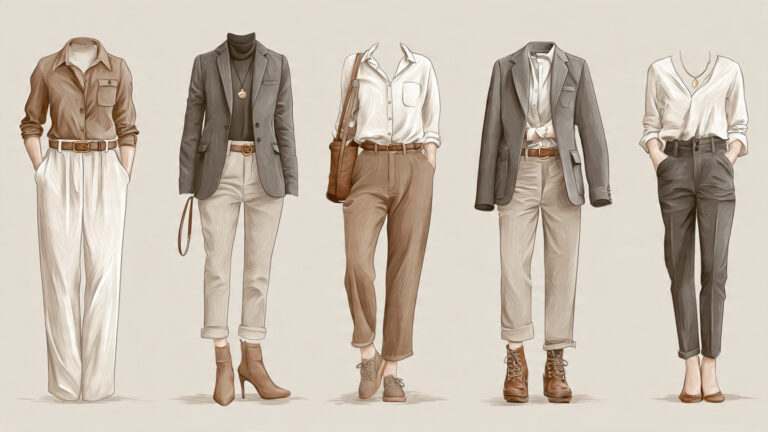
Tattoos often become part of personal style, which is why our Men Forearm Tattoo Designs explores how outfits highlight body art.
This guide breaks that down properly. You’ll find 15 carefully constructed back tattoo ideas for men, each built around style, placement, and long-term wear ability. The goal here isn’t just inspiration — it’s clarity. These are designs that make sense visually and practically. Let’s get into ideas that are actually worth putting on your back.
Back Tattoo Ideas for Men
1. Fine Line Botanical Spine Vine With Micro Leaves
A fine line vine runs cleanly down the spine, built with single-needle precision and evenly spaced micro leaves. The composition stays narrow and controlled, creating a vertical flow that feels intentional rather than decorative. Negative space does most of the work here, giving the design a minimal, almost architectural balance.
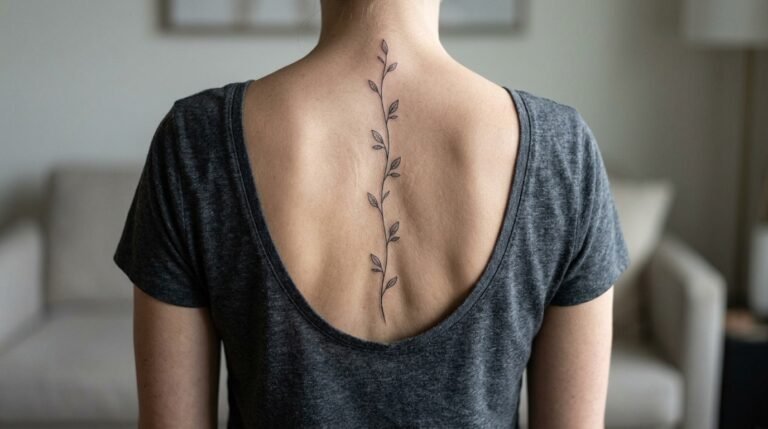
Best placed directly along the spine where symmetry sharpens the effect. Ideal for someone who prefers subtle, refined ink. Pain is sharper along the vertebrae but manageable due to light linework. You can extend the vine upward toward the neck or downward to the lower back for a longer visual line.
Best for: Spine placement | Minimalist personality | First tattoo
2. Heavy Blackwork Wing Spread Across Shoulder Blades
Thick black wings stretch across both shoulder blades, built with saturated fills and bold feather layering. The contrast is aggressive — deep black ink against skin — creating instant visibility even from a distance. The symmetry across the back gives it a commanding, almost armored presence.
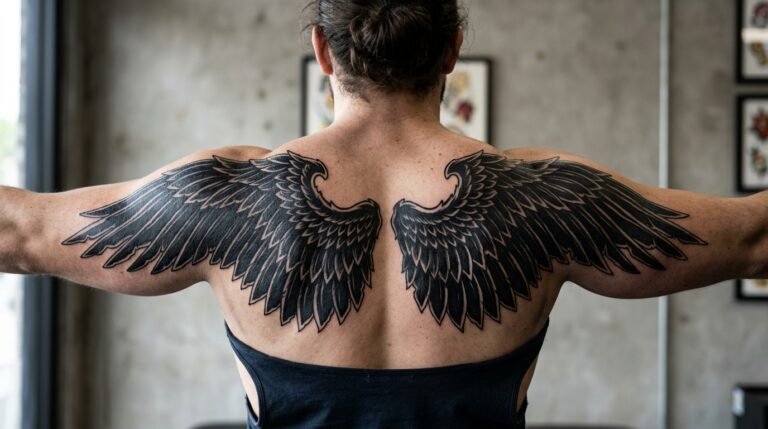
Perfect for upper back placement where shoulder width enhances the spread. Best suited for someone comfortable with bold, high-impact designs. Pain is moderate across the shoulder blades. Feathers can be sharpened, broken, or faded depending on how dramatic you want the wings to feel.
Best for: Upper back | Bold personality | Statement piece
3. Geometric Mandala Centered Between the Shoulders
A symmetrical mandala sits precisely between the shoulder blades, built with layered geometry and controlled dotwork shading. Each ring expands outward with consistent spacing, creating a hypnotic focal point. The balance between sharp lines and soft dot gradients gives it both structure and depth.
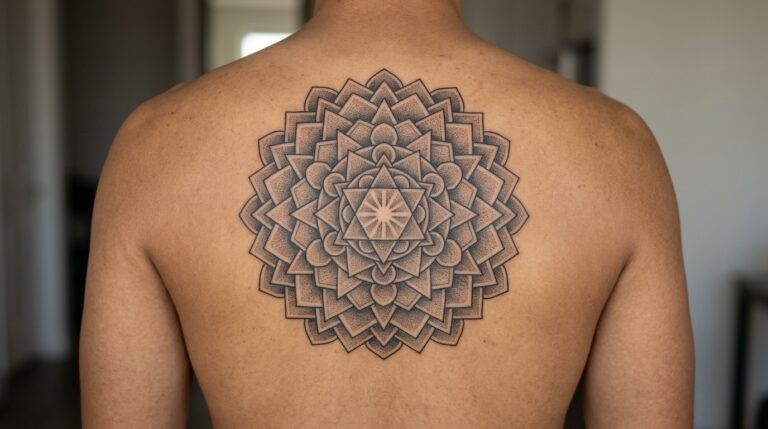
Placed centrally for maximum symmetry and visual balance. Ideal for someone drawn to precision and pattern-based design. Pain increases slightly near the spine. You can scale the mandala outward or integrate sacred geometry elements to make it more complex.
Best for: Upper back center | Detail-focused personality | Balanced design
4. Illustrative Dragon Flowing Diagonally Across the Back
An illustrative dragon moves diagonally across the back, with flowing scales and dynamic curvature. The linework shifts between thick and thin, giving the creature motion. Subtle shading under the body adds depth while the tail tapers naturally into the lower back.
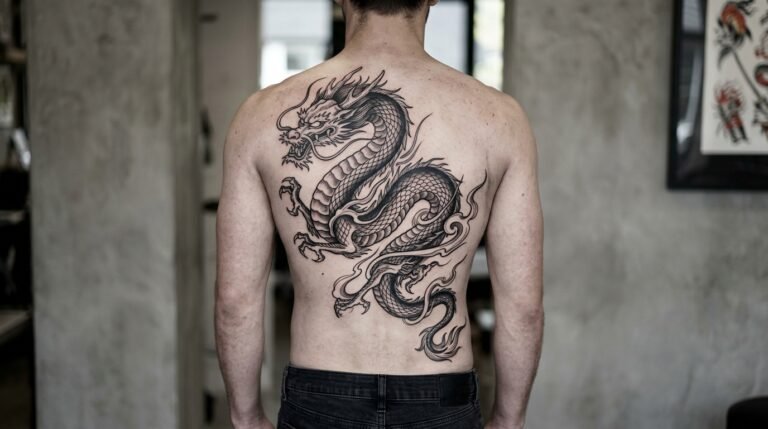
Best for a diagonal full-back composition where movement can be fully expressed. Works well for someone who wants a storytelling piece. Pain varies depending on coverage. Smoke, wind, or flame elements can be added to enhance flow.
Best for: Full back | Expressive personality | Statement artwork
5. Traditional Eagle With Bold Color Blocking
A classic eagle spreads across the upper back with bold outlines and saturated color — deep reds, yellows, and blacks. The design is graphic and timeless, relying on strong shapes rather than fine detail. It reads clearly from any distance.
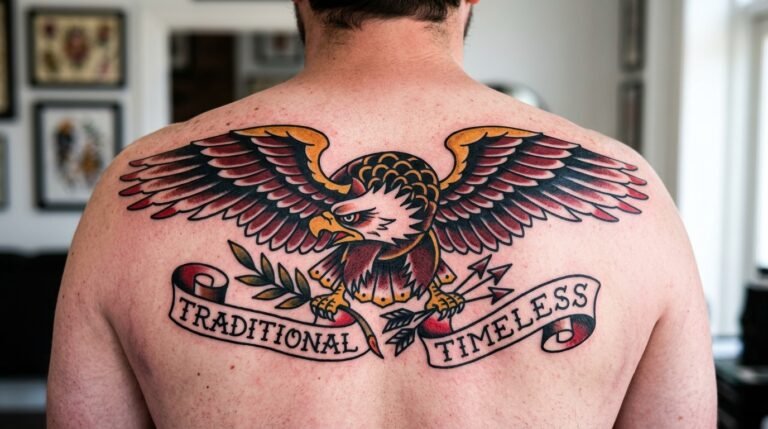
Ideal for upper back placement where width enhances impact. Great for someone who appreciates traditional tattoo culture. Pain is moderate. You can add banners, flags, or symbols to personalize the design.
Best for: Upper back | Classic style | Timeless appeal
6. Neo-Traditional Lion Head With Flowing Mane
A lion’s head sits slightly off-center, with a mane flowing outward in layered color gradients. The neo-traditional approach combines bold outlines with soft shading, giving the design both structure and movement. The texture in the mane creates visual depth.
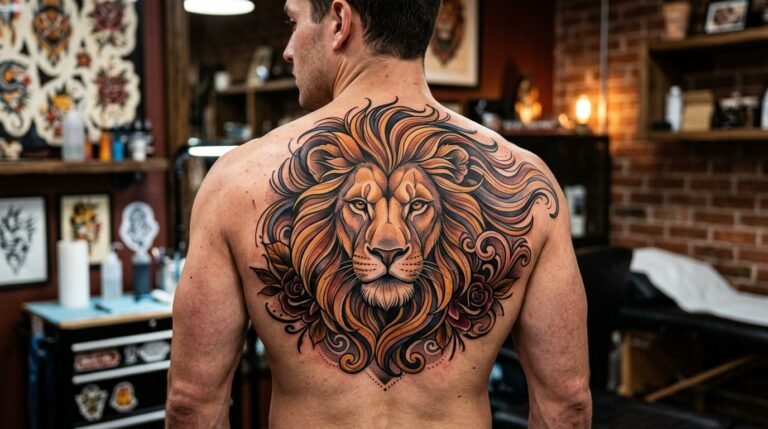
Best placed across the upper back following shoulder contours. Ideal for someone wanting a balance between realism and stylization. Pain is manageable. You can expand the mane or add background elements like smoke or geometric frames.
Best for: Upper back | Confident personality | Artistic detail
7. Dotwork Sacred Geometry Spine Alignment
A sequence of geometric shapes aligns vertically along the spine, each built with precise dotwork. The density of dots shifts gradually, creating a subtle fade effect that adds dimension without heavy shading. The result feels clean but technically detailed.
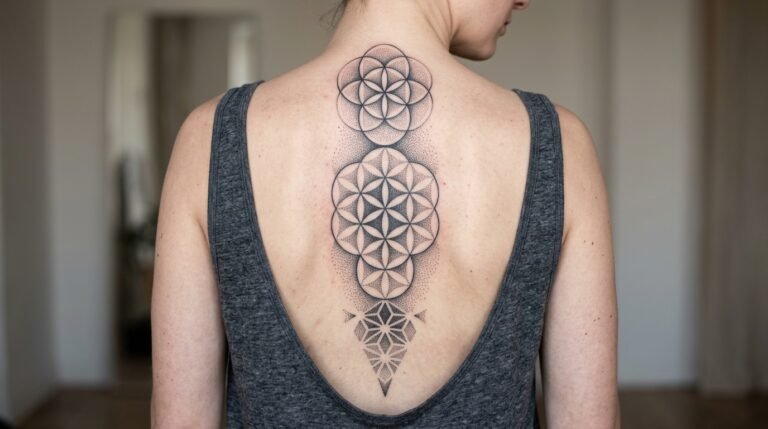
Perfect for spine placement where alignment is critical. Suits someone patient with long sessions and fine detail work. Pain is sharper along bone. You can expand into larger geometric structures over time.
Best for: Spine | Analytical personality | Progressive design
8. Abstract Brushstroke Composition Across Upper Back
Bold brushstroke lines sweep across the upper back, mimicking ink splashes with varying opacity and thickness. The design feels raw and expressive but is carefully placed to follow muscle flow. It’s more about movement than meaning.
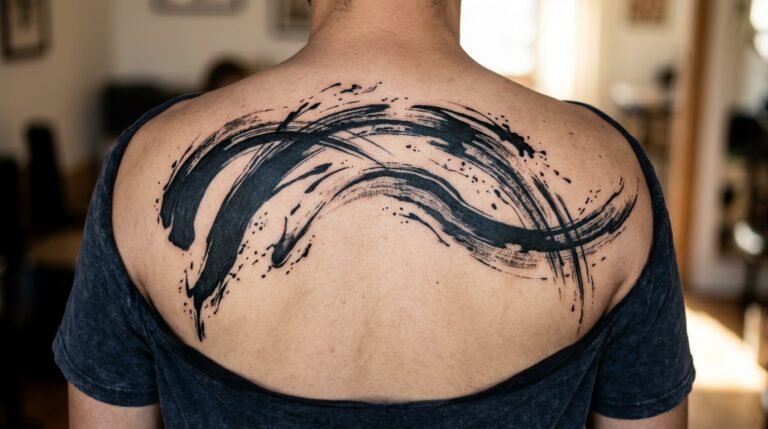
Best for upper back placement with slight asymmetry. Ideal for someone who prefers artistic, non-literal designs. Pain is moderate. Adding subtle color washes can push it toward a more painterly aesthetic.
Best for: Upper back | Creative personality | Artistic expression
9. Realism Warrior Portrait With Deep Shadow Work
A hyper-detailed warrior portrait fills the back, built with deep shadows and fine highlights. The facial structure is sharply defined, and the contrast pulls attention instantly. Every detail is designed to look lifelike.
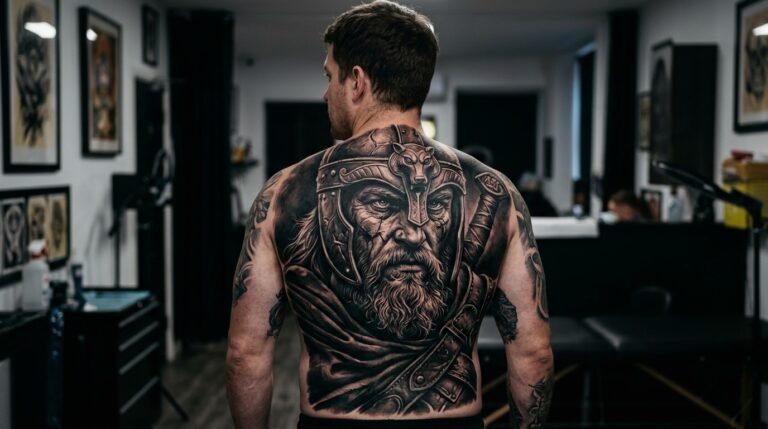
Best for full-back coverage where detail can breathe. Suitable for someone ready for multiple sessions. Pain is higher due to dense shading. Background scenes or textures can expand the narrative.
Best for: Full back | Committed collector | High-detail work
10. Minimal Vertical Script Down the Spine
A single line of script runs vertically along the spine in clean, precise lettering. The spacing between letters is deliberate, creating a balanced and readable flow. It feels personal without being visually heavy.
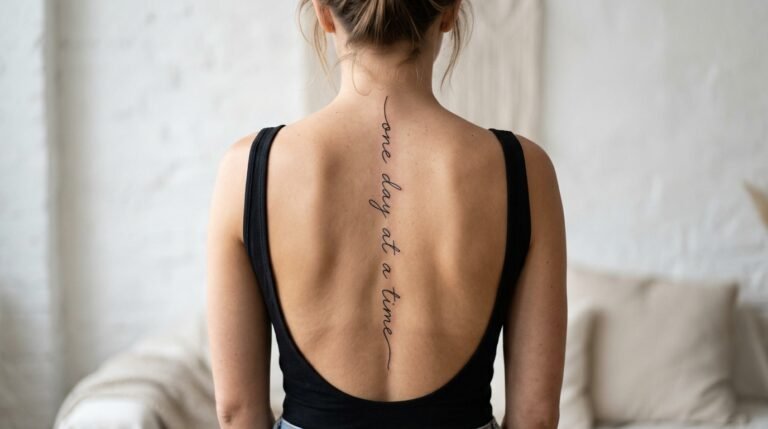
Perfect for spine placement with a clean aesthetic. Ideal for first-timers wanting meaning without complexity. Pain is quick but sharp. Font style and spacing can be fully customized.
Best for: Spine | Minimalist personality | First tattoo
11. Mythological Phoenix Rising From Lower Back
A phoenix rises upward from the lower back, wings spreading with layered feather detail. Flames blend into the body using soft shading, creating motion and energy. The composition naturally draws the eye upward.
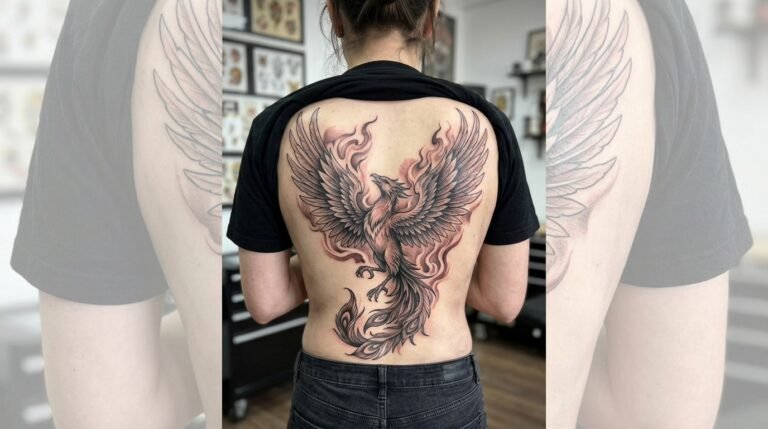
Best placed across lower to mid-back for upward flow. Great for symbolic themes like rebirth. Pain is moderate. Color gradients or black-and-grey both work depending on preference.
Best for: Lower to mid-back | Symbolic meaning | Bold design
12. Gothic Architectural Spine Structure
A cathedral-inspired design runs along the spine, built with sharp arches and vertical lines. The structure feels rigid and detailed, almost like carved stone translated into ink. Fine linework keeps it sharp and precise.

Perfect for spine placement where vertical design is emphasized. Ideal for someone drawn to dark, structured aesthetics. Pain is sharp along bone. Adding shading increases depth and realism.
Best for: Spine | Dark aesthetic | Structured design
13. Mountain Range Horizon Across Upper Back
A wide mountain range stretches across the upper back, rendered with soft linework and subtle shading. The peaks vary in height, creating a natural horizon that sits cleanly across the shoulders.
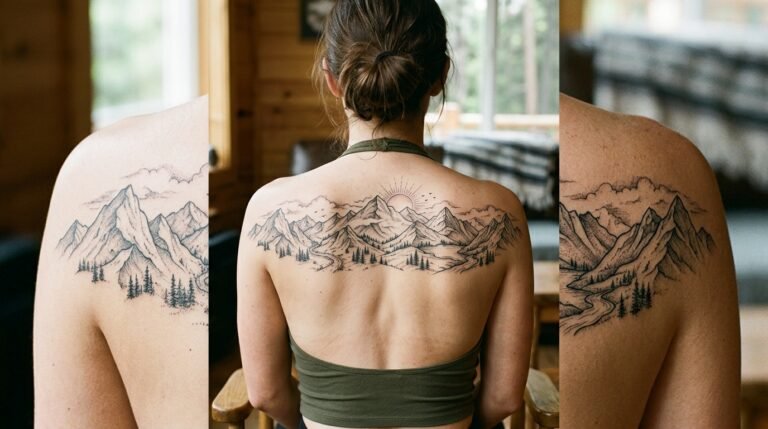
Best for upper back width. Works for someone who prefers calm, grounded imagery. Pain is moderate. You can add fog, trees, or sun elements for variation.
Best for: Upper back | Nature-focused personality | Calm aesthetic
14. Black work Spine Bar With Negative Space Cuts
A solid black bar runs vertically down the spine, broken by sharp negative space cuts. The contrast is bold and graphic, creating a modern, almost industrial feel. It’s minimal but visually aggressive.
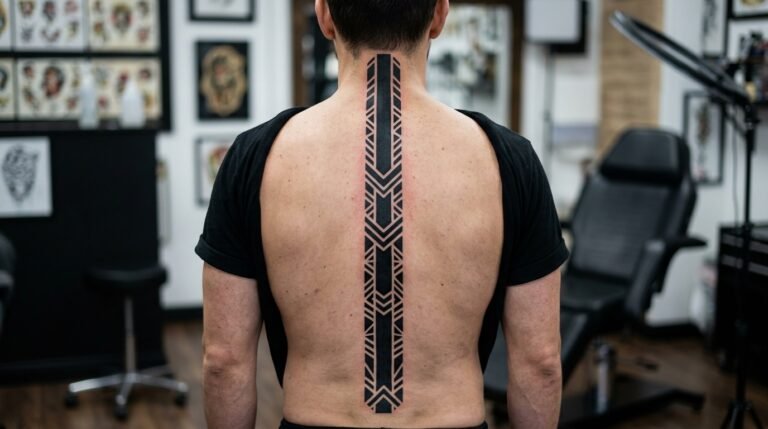
Perfect for spine placement with strong impact. Ideal for someone who likes clean, bold design. Pain is intense along the spine. Custom patterns in the negative space can personalize it.
Best for: Spine | Bold minimalist | Graphic design
15. Full Back Japanese Irezumi With Flowing Elements
A full-back Japanese composition blends waves, clouds, and a central figure into one continuous design. The flow follows the body’s natural curves, creating movement across the entire back. Every element connects seamlessly.
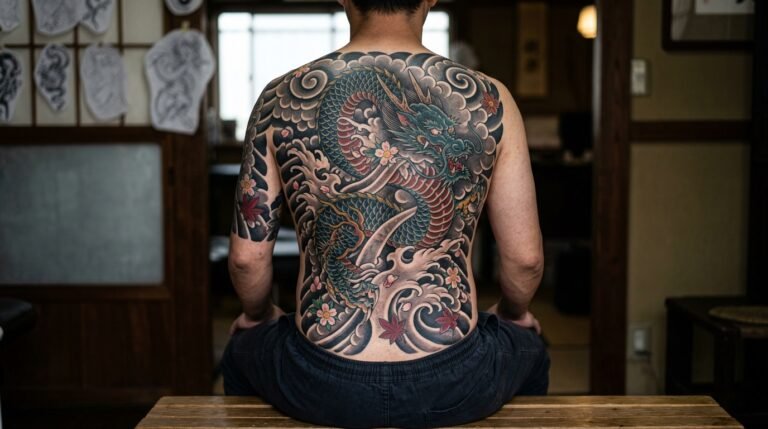
Best for full-back commitment. Suitable for experienced tattoo collectors. Pain varies across sessions. Scale is essential — this design works best when done large.
Best for: Full back | Dedicated collector | Traditional mastery
How to Choose the Right Tattoo Style for Your Personality
Minimalist and fine line styles suit someone who values precision and subtlety. A spine vine or script tattoo works because it relies on placement and restraint rather than size. These designs stay clean and age well when done properly.
Bold styles like blackwork or traditional are for those who want presence. A wing spread or eagle design creates immediate impact and holds its shape over time due to strong outlines and saturation.
Geometric and abstract styles appeal to structured thinkers and creatives. A mandala or brushstroke piece isn’t about literal meaning — it’s about balance, flow, and visual rhythm.
Illustrative and realism styles are built for storytelling. A dragon or warrior portrait carries narrative weight but requires time, budget, and commitment to detail.
Symbolic designs work best when the meaning is clear before the design starts. A phoenix or script piece should feel intentional, not forced.
Best Tattoo Placements and What They Communicate
The back offers the most freedom. It’s ideal for large-scale designs that need space, like dragons, wings, or Japanese compositions. It communicates commitment and long-term thinking.
Forearm tattoos are outward-facing and visible, often used for storytelling. Chest tattoos are more personal and usually hidden, making them more intimate.
Back tattoo ideas for men work best when the design follows muscle structure. A poorly placed design can feel disconnected, while a well-placed one looks natural.
Tattoos often become part of personal style, which is why our Smart Casual Looks for Men explores how outfits highlight body art.
Wrist and hand tattoos are bold and always visible, which can affect professional settings. Upper arm placements are balanced and allow progression into sleeves over time.
What to Know Before Getting Your First Tattoo
Start by choosing an artist who specializes in the style you want. A realism artist won’t deliver the same result as a traditional or fine line specialist.
Reference images matter more than descriptions. Show exactly what you’re aiming for so the artist can interpret it correctly.
Size and placement decisions affect how the tattoo ages. Small, detailed designs can blur, while larger designs on the back tend to hold detail better.
Aftercare is critical in the first two weeks. Keep the tattoo clean, moisturized, and out of the sun. Avoid swimming and tight clothing.
Rushing the process is the biggest mistake. Take your time choosing both the design and the artist.
Conclusion
Back tattoo ideas for men range from minimal spine pieces to full-back compositions that take serious commitment. The best designs aren’t just visually strong — they fit your body, your style, and your long-term mindset.
Take the time to build references, understand what style actually suits you, and choose an artist who knows how to execute it properly. A well-planned back tattoo doesn’t just fill space — it becomes part of how your body tells a story.