Japanese Irezumi Tattoo Men That Command Respect
Choosing a tattoo isn’t just about picking something that looks good today — it’s about committing to a visual identity that stays with you for decades. With japanese irezumi tattoo men designs, the challenge becomes even sharper. The style carries history, symbolism, and a visual density that can either elevate your presence or overwhelm it if done wrong. Placement and composition matter just as much as the artwork itself.
Choosing the right design starts with exploring Men Blackwork Tattoo Arm Ideas that match your personality
This guide breaks down 16 carefully curated irezumi-inspired ideas, each with distinct style direction, placement logic, and visual structure. You’ll also get clarity on choosing styles, understanding placements, and avoiding beginner mistakes. This is written from the perspective of someone who studies the ink, not just scrolls past it — so let’s get into designs that actually hold weight on skin.
Japanese Irezumi Tattoo Men
1. Koi Fish Flowing Upward With Soft Gradient Shading on the Forearm
Fine line work defines the koi’s scales with subtle precision, while gradient shading gives the body a fluid, almost water-like motion. The composition runs vertically along the forearm, guiding the eye upward as if the fish is swimming against a current. It feels controlled, symbolic, and quietly powerful.
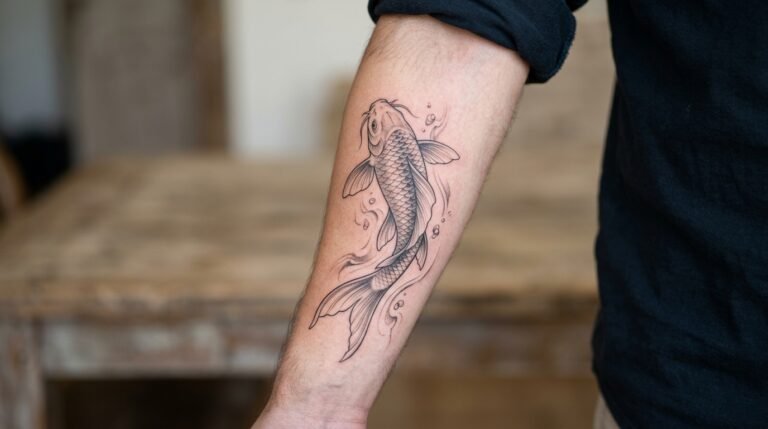
Forearm placement enhances the natural flow of the design, making it visible without being overwhelming. Ideal for first-timers who want meaning without excessive density. Pain is moderate due to thinner skin. You can extend it into a half sleeve or add water waves for narrative depth.
2. Blackwork Oni Mask With Heavy Shadows on the Upper Arm
Thick blackwork dominates this oni mask, with deep shadow pockets around the eyes and exaggerated horns pushing outward. The design feels dense and aggressive, with high contrast between solid black fills and sharp negative space. It reads bold even from a distance.
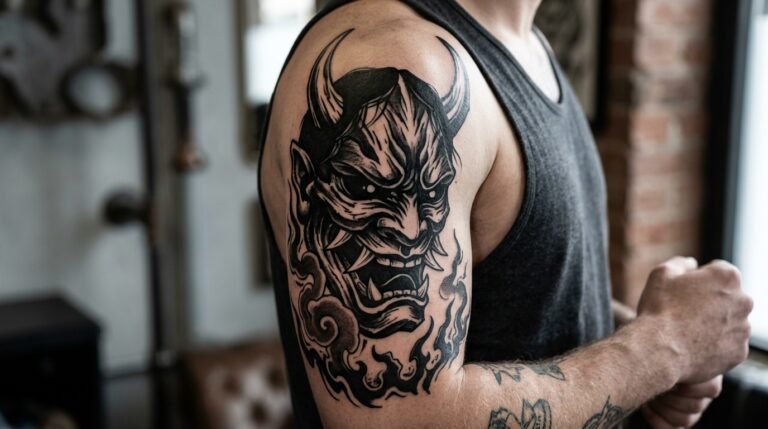
Upper arm placement gives the mask room to breathe while maintaining a strong silhouette. Best suited for someone comfortable with bold ink. Pain is manageable due to muscle padding. You can add flames or smoke elements to transition into a sleeve.
3. Geometric Sakura Pattern Wrapped Around the Chest
Cherry blossoms are reduced into geometric forms, creating a repeating pattern that feels both organic and engineered. Thin lines intersect with petals, forming a symmetrical layout across the chest. The result is minimal yet structured, blending nature with precision.
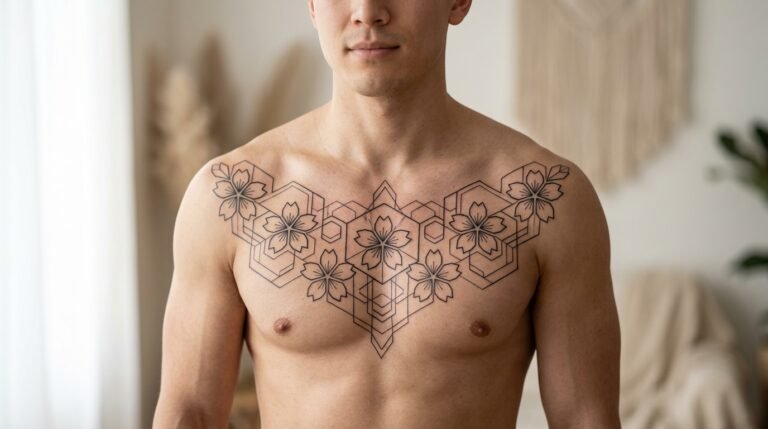
Chest placement emphasizes symmetry and keeps the design personal. Great for someone who prefers controlled aesthetics. Pain is higher near the sternum. You can expand outward toward shoulders for a broader composition.
4. Illustrated Samurai Warrior in Mid-Strike Across the Back
An illustrative approach captures the samurai mid-action, with layered armor details and motion lines suggesting movement. Shading is soft but detailed, giving depth to fabric folds and weapon positioning. The composition feels cinematic and expansive.
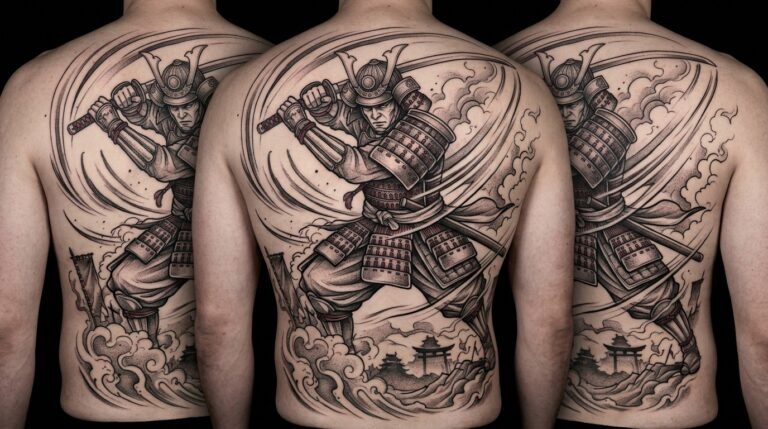
The back offers a large canvas for storytelling designs like this. Ideal for experienced collectors. Pain varies but is generally manageable. You can build a full narrative with background elements like smoke or battlefield scenery.
5. Traditional Red Hannya Mask on the Wrist
Classic traditional style brings bold outlines and saturated red tones into the Hannya mask. The expression is sharp and exaggerated, with clean linework that keeps the design readable even at a smaller scale.
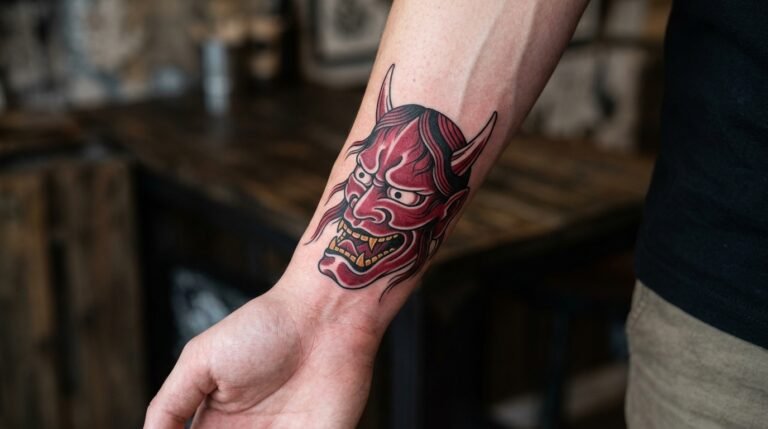
Wrist placement makes this a statement piece — always visible and impossible to ignore. Best for bold personalities. Pain can be sharp due to proximity to bone. You can scale it slightly or keep it tight for a punchy effect.
6. Neo-Traditional Dragon Head With Color Blends on the Hand
The dragon’s head features smooth color transitions, blending greens, reds, and golds with thicker outlines typical of neo-traditional work. The design sits compact yet detailed, with expressive eyes and curling whiskers.
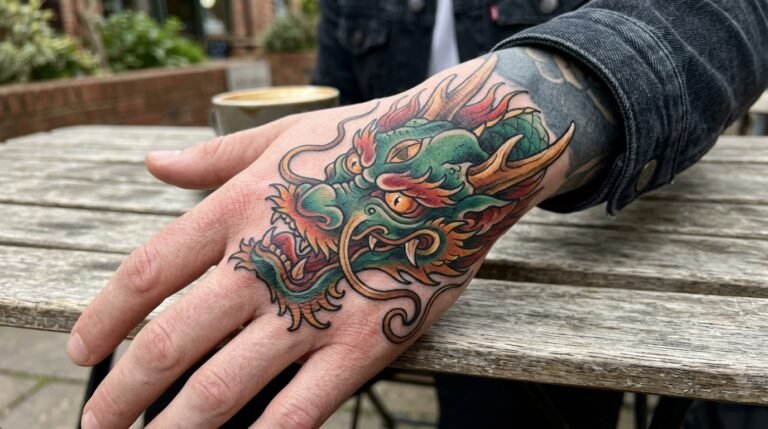
Hand placement is high commitment — visibility is constant. Best for those already tattooed. Pain is intense but brief. You can extend the dragon into the forearm for continuity.
7. Dotwork Lotus Bloom on the Shoulder
Thousands of tiny dots build the lotus, creating gradients without solid fills. The petals feel textured and layered, giving a soft yet detailed appearance. It’s understated but visually rich up close.
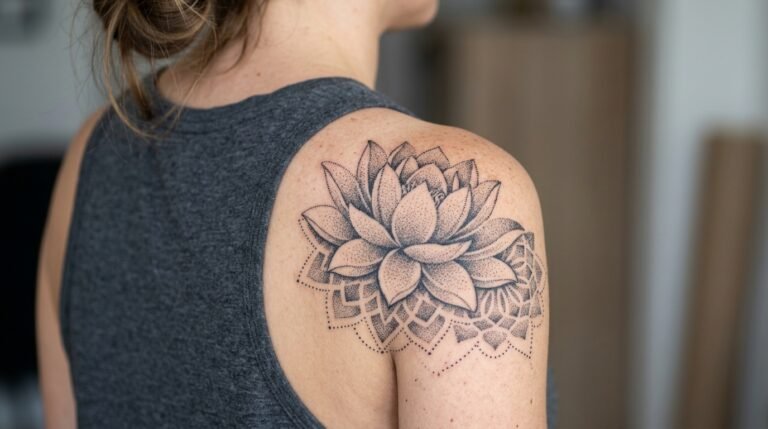
Shoulder placement works well for circular compositions. Ideal for someone who prefers subtle complexity. Pain is moderate. You can integrate mandala patterns for added structure.
8. Abstract Wave Pattern Flowing Across the Rib
Instead of literal waves, this design uses abstract shapes and flowing lines to suggest movement. The composition curves with the body, creating a dynamic visual that feels alive without being overly detailed.
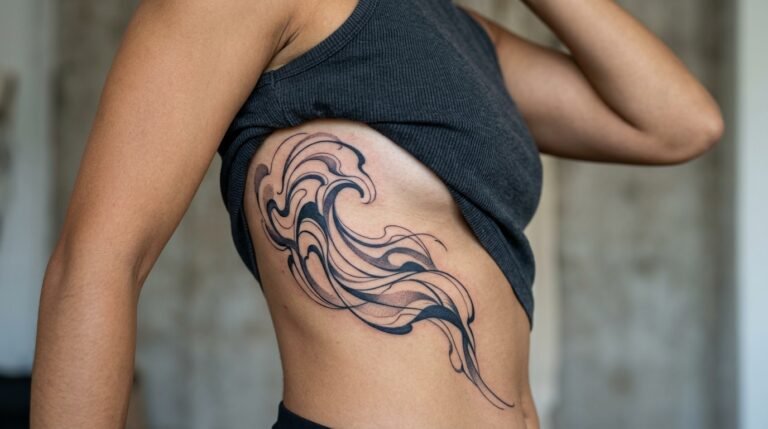
Rib placement enhances the natural flow but comes with higher pain levels. Best for experienced collectors. You can expand it upward or downward to create a larger fluid composition.
9. Realistic Tiger Face Emerging From Shadows on the Calf
Hyper-realistic shading brings the tiger’s face to life, with detailed fur textures and piercing eyes emerging from darkness. The contrast between light and shadow adds depth and intensity.
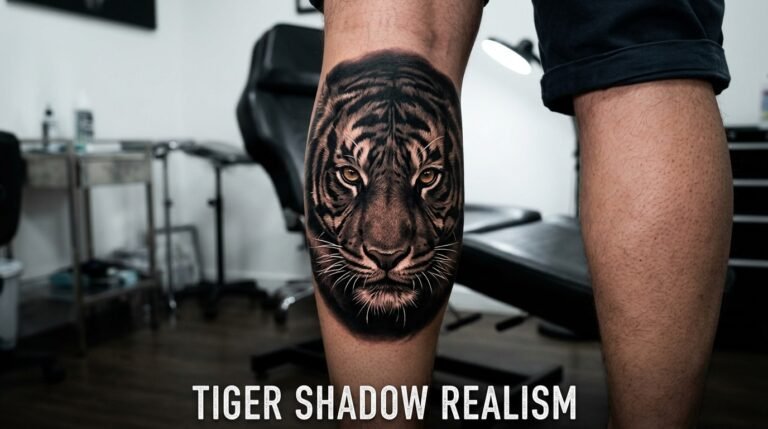
Calf placement supports vertical designs and muscle movement. Suitable for bold personalities. Pain is moderate. You can extend into a full leg piece with jungle elements.
10. Fine Line Bamboo Stalk Minimalism on the Neck
Thin, clean lines form bamboo stalks that run vertically along the neck. The design is minimal but deliberate, using spacing and line weight to create elegance without clutter.
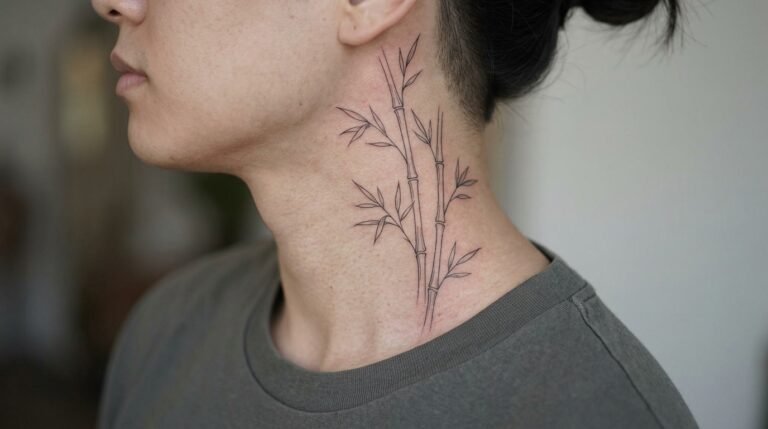
Neck placement is highly visible and not for beginners. Pain is sharp but quick. You can keep it minimal or extend into the shoulder for balance.
11. Blackwork Phoenix Rising on the Forearm
Heavy black fills define the phoenix’s wings, with negative space used to highlight feather details. The upward motion gives the design a strong directional energy.
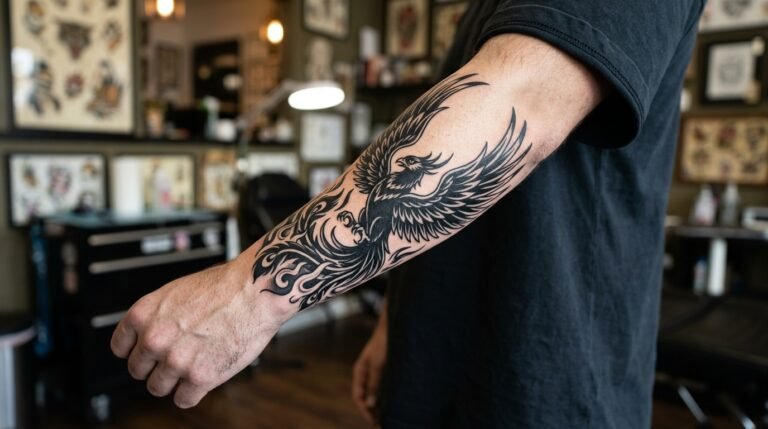
Forearm placement enhances visibility and flow. Great for someone ready for a statement piece. Pain is moderate. You can extend into a sleeve with flames or clouds.
12. Geometric Dragon Spine Alignment on the Upper Arm
The dragon’s body is broken into geometric segments, creating a structured yet fluid look. Lines follow the muscle contours, giving the design a mechanical rhythm.
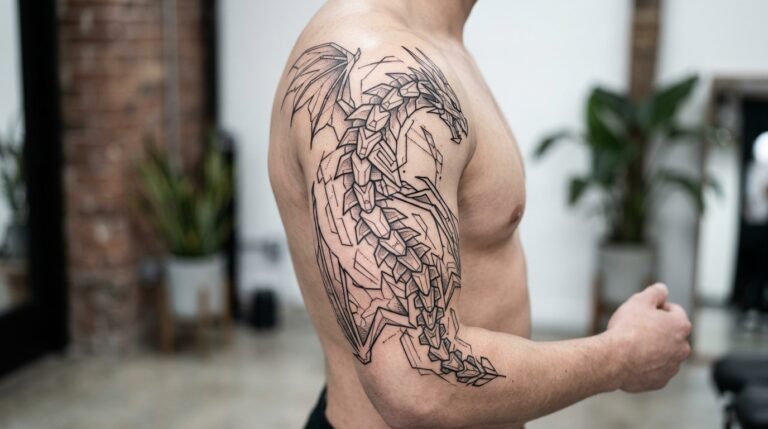
Upper arm placement complements the structure. Ideal for those who like modern interpretations. Pain is manageable. You can extend into a half sleeve.
13. Illustrative Japanese Fan With Scenic Detail on the Chest
The fan opens across the chest, revealing a miniature landscape inside — mountains, trees, and sky rendered in illustrative style. It feels like a story contained within a single object.
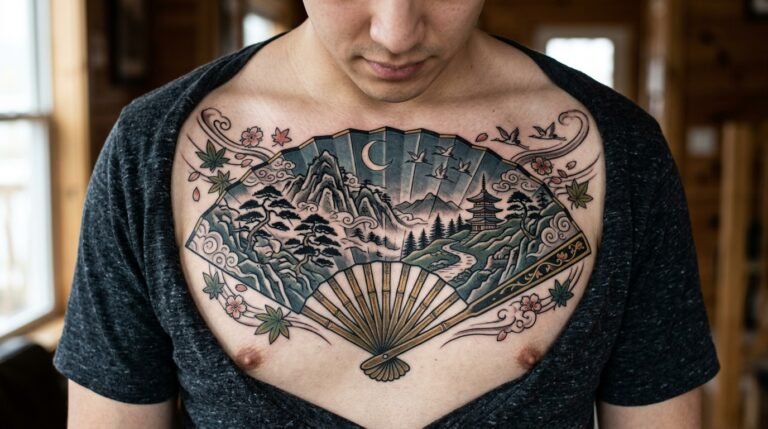
Chest placement allows symmetry and detail. Best for collectors who appreciate narrative designs. Pain varies. You can expand the scenery outward.
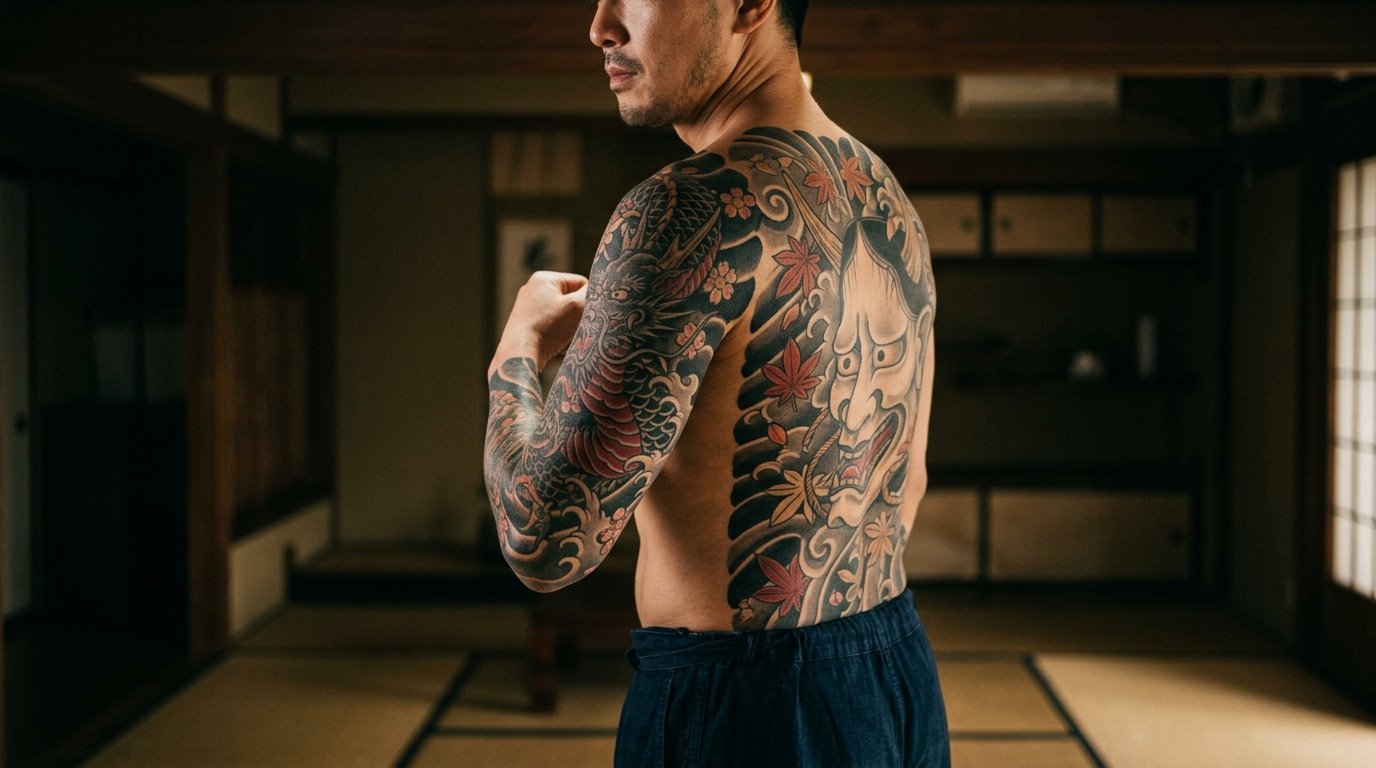
14. Traditional Dragon Coiling Across the Back
Bold outlines and saturated colors define this traditional dragon, coiling across the back with strong movement. The design is dense, iconic, and unmistakably irezumi.
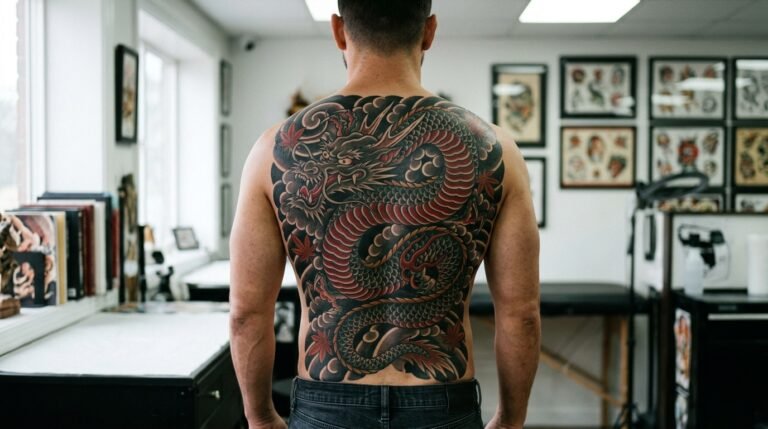
Back placement gives full freedom for scale. Ideal for experienced collectors. Pain is manageable over sessions. You can build a full body composition from this base.
15. Neo-Traditional Samurai Helmet on the Wrist
The samurai helmet is stylized with rich colors and clean outlines, blending traditional elements with modern shading. It feels compact but visually impactful.
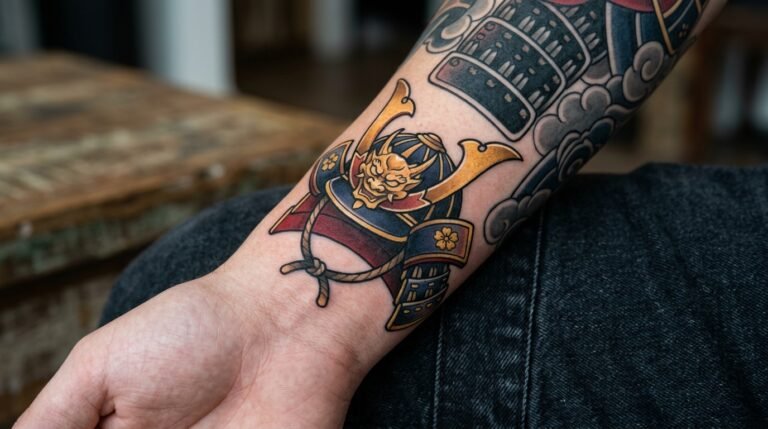
Wrist placement keeps it visible and symbolic. Best for confident wearers. Pain is sharp. You can connect it to forearm armor motifs.
16. Dotwork Temple Architecture on the Hand
Fine dotwork creates the structure of a Japanese temple, with precise lines forming architectural symmetry. It’s intricate and requires close inspection to fully appreciate.
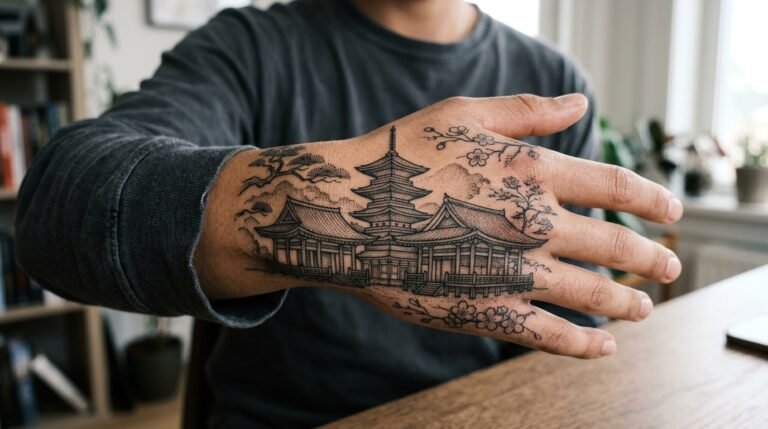
Hand placement adds intensity and visibility. Best for experienced tattoo collectors. Pain is high. You can extend into a sleeve with landscape elements.
How to Choose the Right Tattoo Style for Your Personality
Minimalist and fine line designs suit those who value subtlety and precision. A bamboo stalk or single koi works because it communicates meaning without overwhelming the skin.
Bold styles like blackwork or traditional irezumi fit personalities that want presence. A dragon sleeve or Hannya mask doesn’t sit quietly — it defines your look.
Geometric and abstract designs appeal to structured thinkers. A geometric dragon or abstract wave pattern feels intentional and modern.
Illustrative and realism styles work for storytelling. A samurai scene or tiger portrait creates depth and narrative.
Symbolic designs require clarity in meaning. A koi, lotus, or phoenix only works when you understand the story behind it — otherwise it becomes decoration without weight.
Best Tattoo Placements and What They Communicate
Forearm tattoos are about visibility and storytelling. They age well if spacing and line weight are done correctly.
Chest tattoos feel personal. They stay hidden when needed and allow symmetrical designs like fans or sakura layouts.
Your tattoos stand out more when styled with White Linen Shirt Men that highlight your body art.
Back tattoos offer the largest canvas, perfect for dragons, samurai, and full narrative pieces.
Wrist and hand placements signal commitment. They’re always visible and often tied to bold personalities.
Upper arm and sleeves allow progression. You can start small and expand into full compositions over time.
What to Know Before Getting Your First Tattoo
Start by researching artists who specialize in japanese irezumi tattoo men designs. Style mismatch is one of the biggest mistakes beginners make.
Reference images matter more than vague descriptions. Show exactly what you want — composition, shading, and style direction.
Size and placement decisions affect longevity. Small, overly detailed designs blur over time, while well-spaced designs age better.
Aftercare is critical in the first two weeks. Keep the tattoo clean, moisturized, and protected.
Avoid sun exposure, swimming, and tight clothing over fresh ink. These small mistakes can ruin even the best design.
Conclusion
From koi and dragons to samurai and abstract waves, japanese irezumi tattoo men designs cover a wide spectrum of styles, placements, and meanings. Each choice — from line weight to placement — shapes how the tattoo lives on your body over time.
The right tattoo isn’t just visually strong — it aligns with your personality, your tolerance for visibility, and your long-term commitment. Take your time, gather references, and work with an artist who understands the depth behind the style. Good ink doesn’t just sit on the skin — it becomes part of how you carry yourself.