18 Men’s Japanese Sleeve Tattoo That Make Every Inch Count
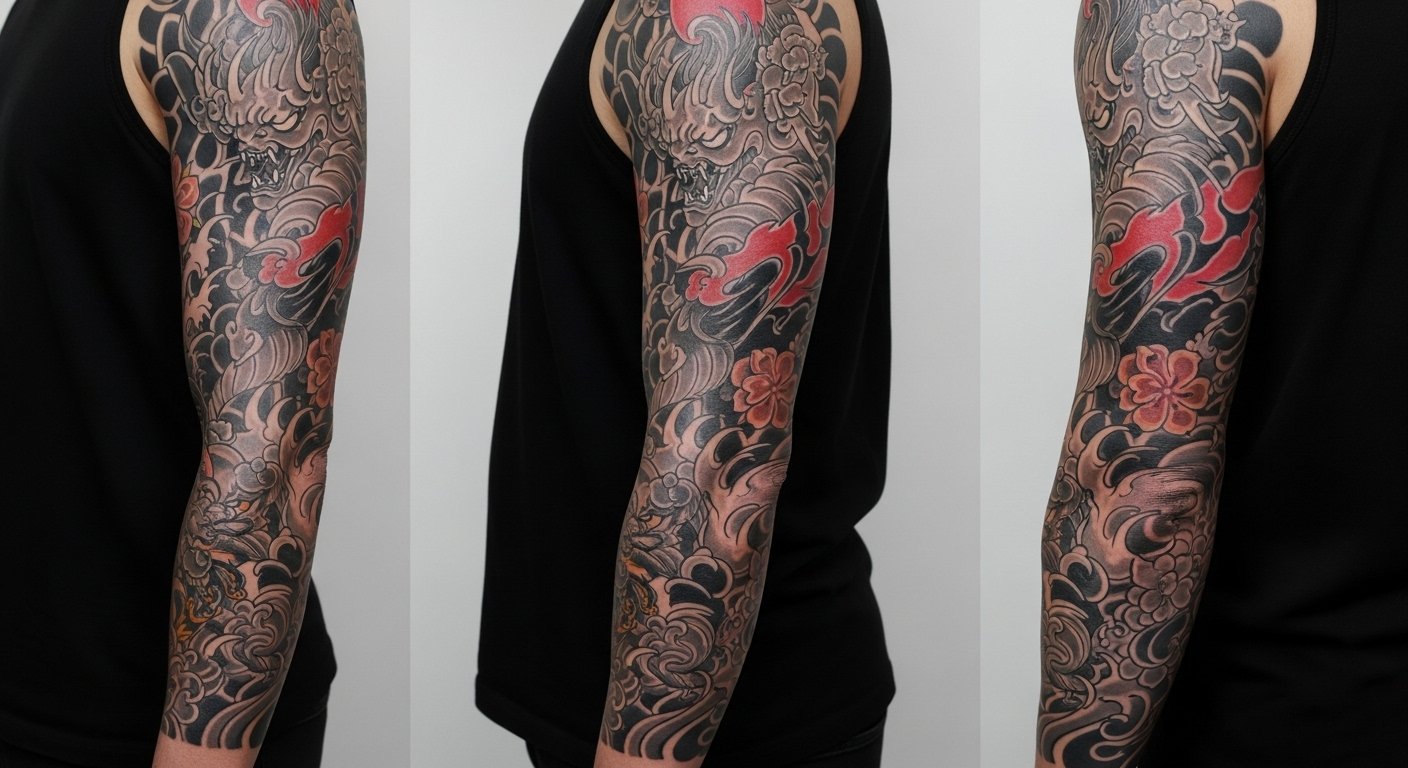
Choosing the right tattoo isn’t about picking something that looks good today — it’s about committing to a design that still feels right years later. With Men’s Japanese sleeve tattoo styles, the challenge becomes even sharper: there’s a deep tradition, complex symbolism, and a flow that has to work across the entire arm. One wrong element can break the entire composition.
This guide breaks that pressure down into clarity. You’ll find 18 carefully structured Japanese tattoo ideas, each built with placement logic, visual flow, and real-world wearability in mind. The perspective comes from understanding how these designs actually sit on the body — not just how they look in isolation. Let’s get into the designs that actually hold up.
For a bold look, explore our guide to Homecoming Outfits for Guys that work well with visible tattoos.
Men’s Japanese Sleeve Tattoo Ideas
1. Flowing Koi Fish With Water Ripples Wrapping the Forearm
Fine line work shapes a koi in mid-motion, curving naturally along the forearm with soft wave patterns trailing behind. The line weight stays controlled, while subtle grey shading adds depth without overpowering the composition. It reads fluid and minimal up close, but from a distance, the movement creates a strong directional pull.
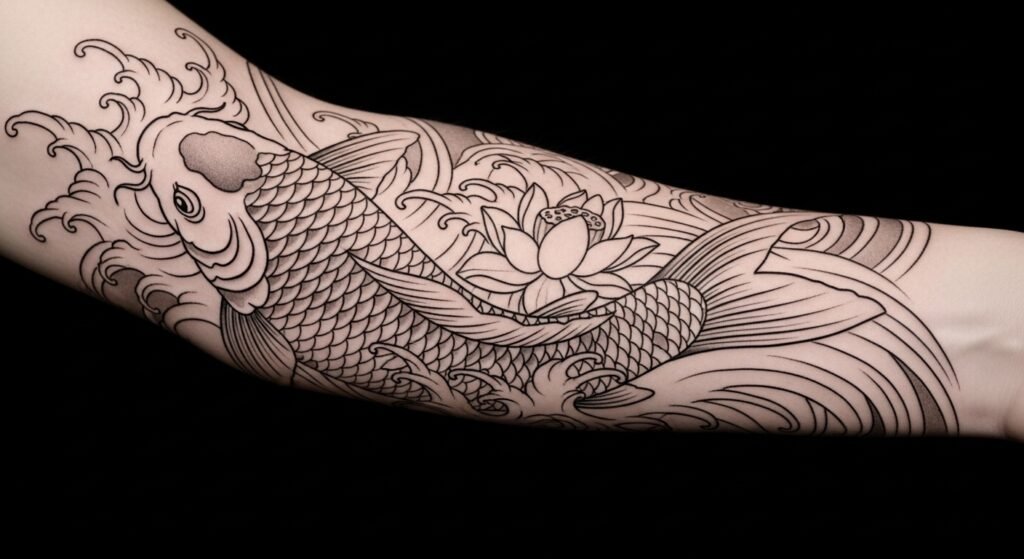
Best placed on the forearm where the natural muscle flow enhances the swimming motion. Ideal for first-timers who want symbolism without heavy saturation. Pain is moderate due to nerve density. Can be expanded into a full Japanese arm tattoo sleeve with added water, lotus, or secondary koi.
Best for: Forearm | Balanced personalities | Sleeve starter
2. Bold Blackwork Dragon Coiling Around the Upper Arm
Thick blackwork lines define a coiled dragon, wrapping tightly around the upper arm with dense shadow fills and sharp scale textures. The composition feels powerful and contained, with negative space used strategically to separate body segments and maintain clarity.
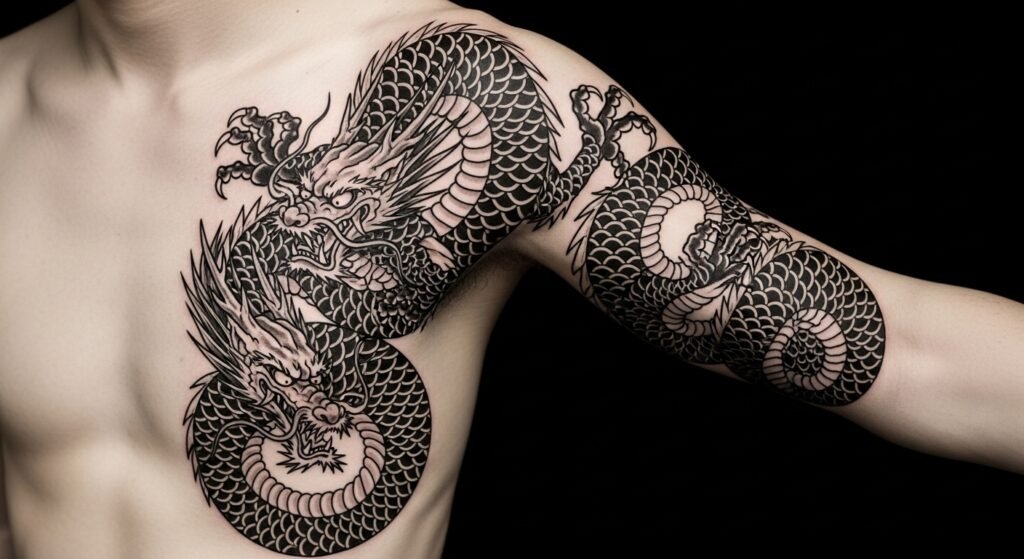
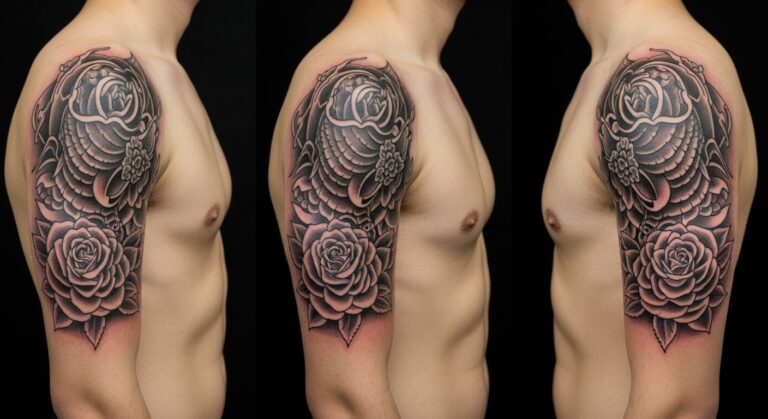
Upper arm placement allows the design to flex with muscle movement, enhancing the dragon’s coiled tension. Best suited for experienced collectors or bold personalities. Pain is manageable. Can be extended into a full Japanese wrap around tattoo flowing into shoulder and chest.
Best for: Upper arm | Strong presence | Statement piece
3. Geometric Chrysanthemum With Radial Symmetry on the Chest
This piece uses precise geometric structure to reinterpret a chrysanthemum, with layered petals forming perfect radial symmetry. Clean linework and controlled dot shading create a structured yet organic feel. It’s more graphic than traditional, but still rooted in Japanese visual language.
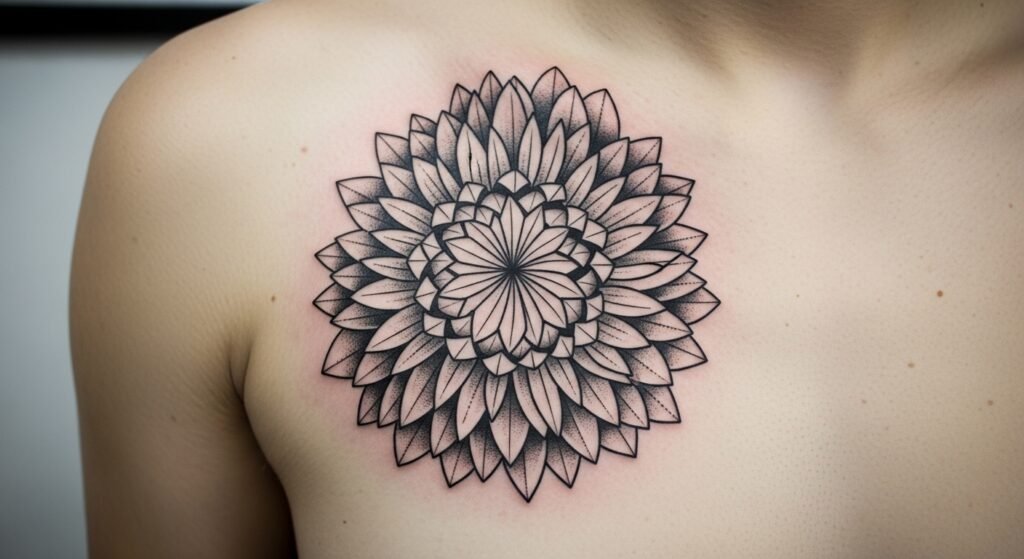
Centered chest placement gives symmetry room to breathe and ensures longevity. Ideal for those drawn to order and precision. Pain is higher over sternum. Can integrate into a broader Japanese artwork tattoo composition across the torso.
Best for: Chest | Detail-oriented | Balanced symmetry
4. Illustrative Samurai in Mid-Battle Across the Back
An illustrative samurai scene stretches across the back, with layered armor textures, wind-swept garments, and dynamic sword positioning. Fine shading and directional strokes create motion, almost like a frozen cinematic frame.
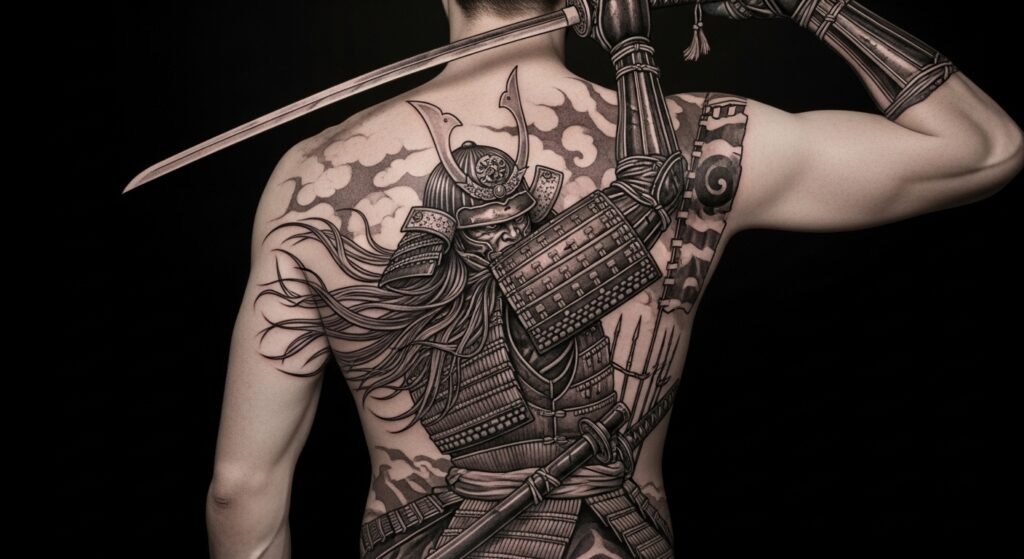
Back placement provides the scale needed for storytelling. Best for experienced tattoo collectors ready for long sessions. Pain varies but is manageable across muscle areas. Can expand with background elements like smoke, banners, or battlefield debris.
Best for: Back | Story-driven personalities | Large-scale commitment
5. Traditional Japanese Fan With Floral Accents on the Wrist
Classic traditional style with bold outlines and limited color palette. The fan spreads outward with stylized cherry blossoms layered inside, creating contrast between rigid structure and soft petals.
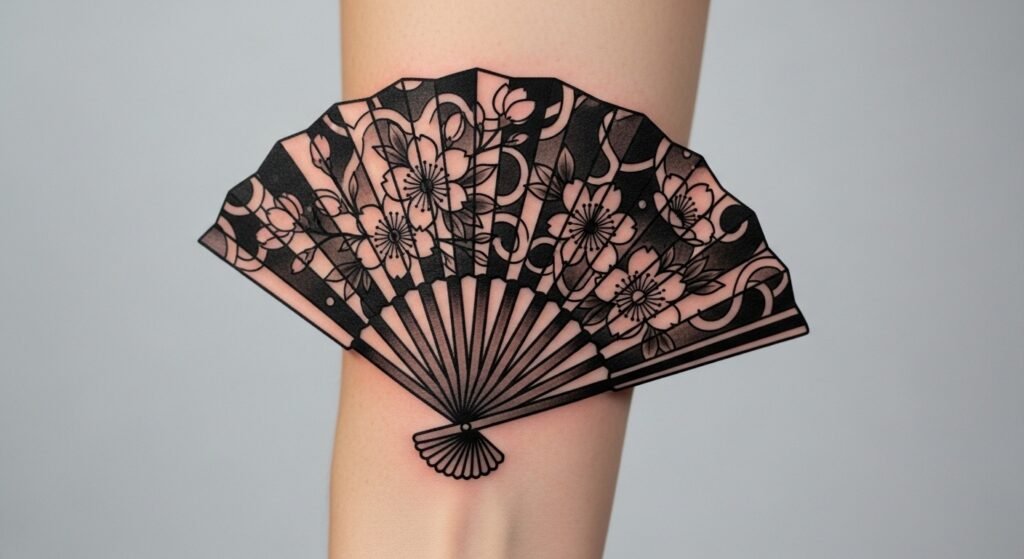
Wrist placement makes it highly visible and symbolic. Works well for those wanting a smaller Japanese tattoos forearm extension later. Pain is sharp due to thin skin. Can be customized with color or kept blackwork for longevity.
Best for: Wrist | Visible minimalists | First tattoo
6. Neo-Traditional Hannya Mask With Soft Color Gradients on the Hand
A Hannya mask rendered in neo-traditional style blends bold outlines with smooth color transitions. The exaggerated expression and sharp horns dominate the composition, while subtle gradients soften the intensity.
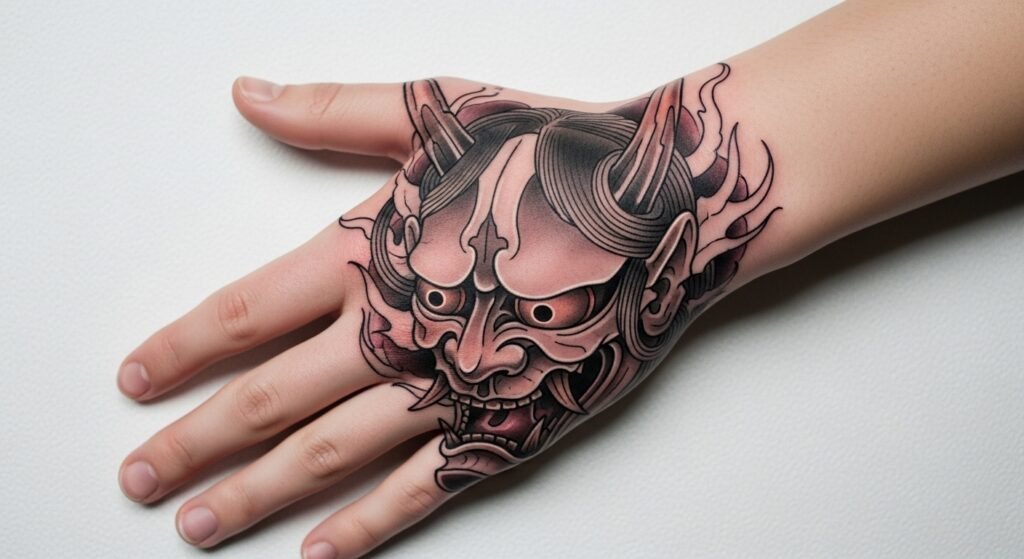
Hand placement makes this a bold, high-commitment choice. Best for confident personalities. Pain is intense and healing requires care. Can connect into a Japanese themed tattoos for men sleeve through wrist transitions.
Best for: Hand | Fearless style | High visibility
7. Dotwork Phoenix Rising Across the Shoulder
A phoenix emerges upward using dotwork shading, creating a textured gradient that feels almost etched into the skin. The wings stretch outward with delicate dot density variations, giving depth without heavy lines.
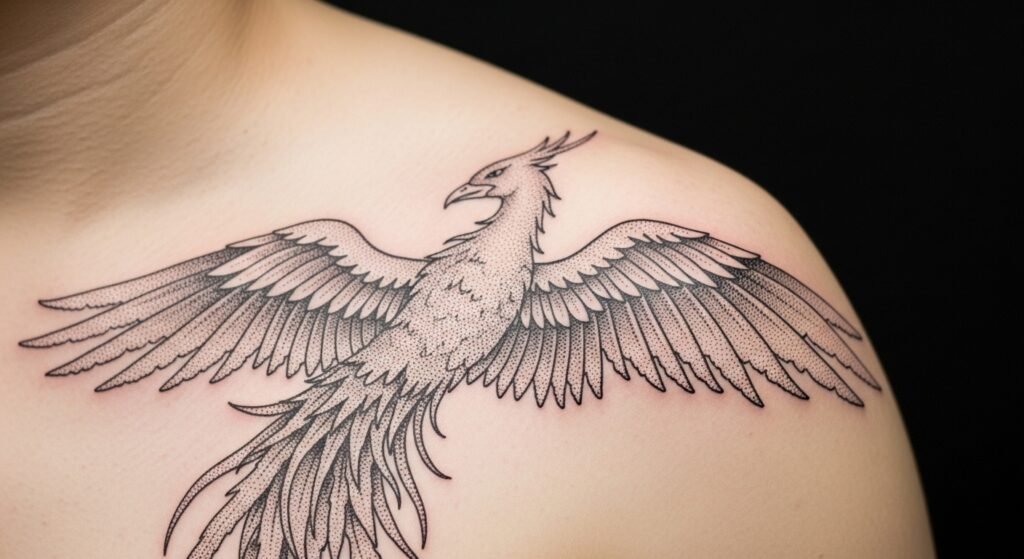
Shoulder placement enhances the upward motion. Ideal for those who want something symbolic yet subtle. Pain is moderate. Can extend into a full Japanese tats sleeve flowing down the arm.
Best for: Shoulder | Symbolic thinkers | Growth themes
8. Abstract Wave Patterns Wrapping the Rib Cage
Abstract interpretation of traditional waves uses flowing black shapes and fragmented linework to create a sense of chaos and movement. The design feels modern while still referencing classic Japanese water motifs.
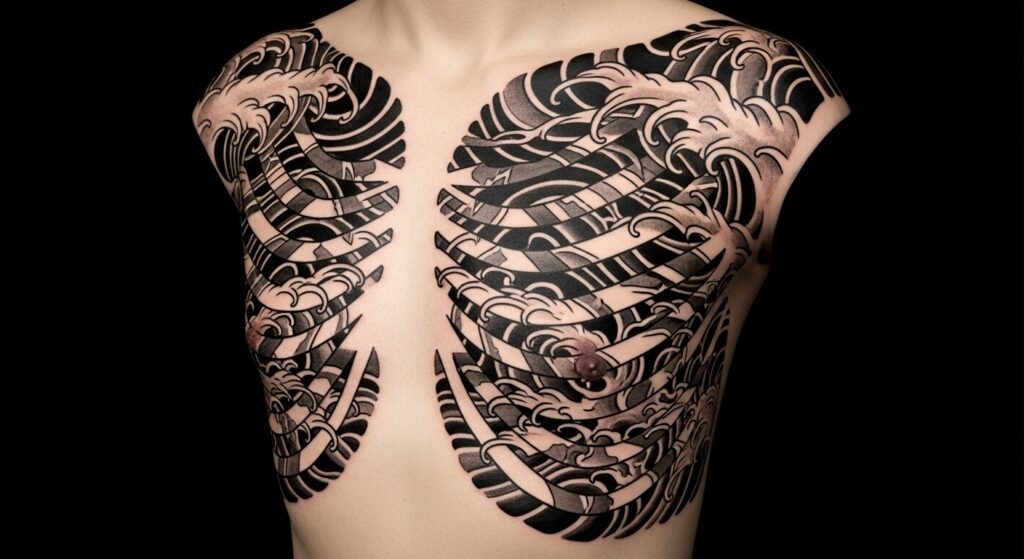
Rib placement follows the natural curve of the body. Best for those comfortable with higher pain levels — ribs are intense. Can integrate into larger Japanese inspired tattoos men compositions across torso.
Best for: Rib | Artistic personalities | Experimental style
9. Realistic Tiger Face Emerging From Shadows on the Calf
Hyper-detailed realism captures a tiger’s face partially emerging from shadow, with fine fur detailing and sharp eye contrast. The composition uses darkness to frame the subject rather than fill space.
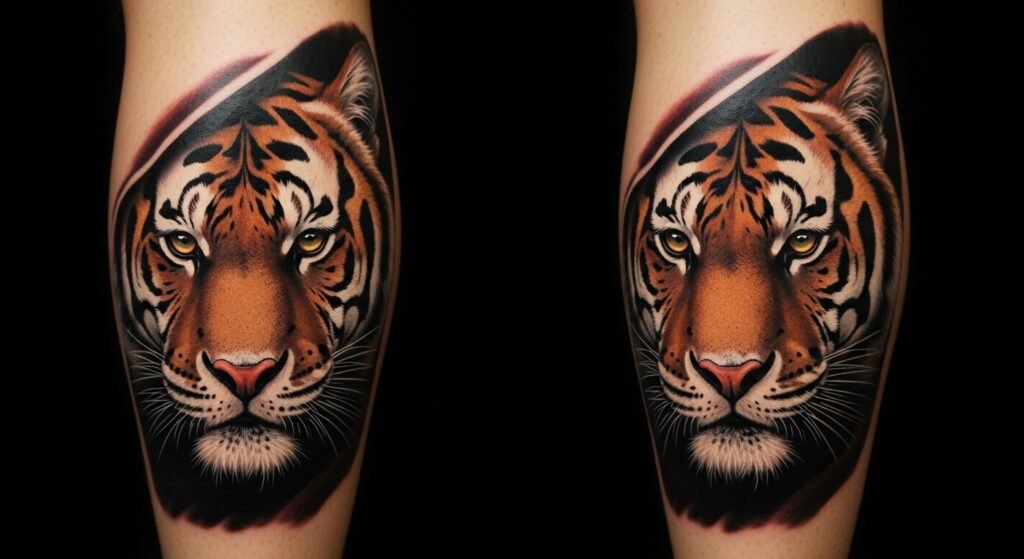
Calf placement provides a vertical canvas ideal for realism. Pain is manageable. Works well for those wanting a strong standalone piece before committing to a Japanese tattoo designs forearm or sleeve.
Best for: Calf | Bold energy | Standalone impact
10. Fine Line Bamboo Stalks Climbing the Neck
Thin, controlled lines create vertical bamboo stalks with minimal shading. The design feels light but structured, following the natural verticality of the neck.
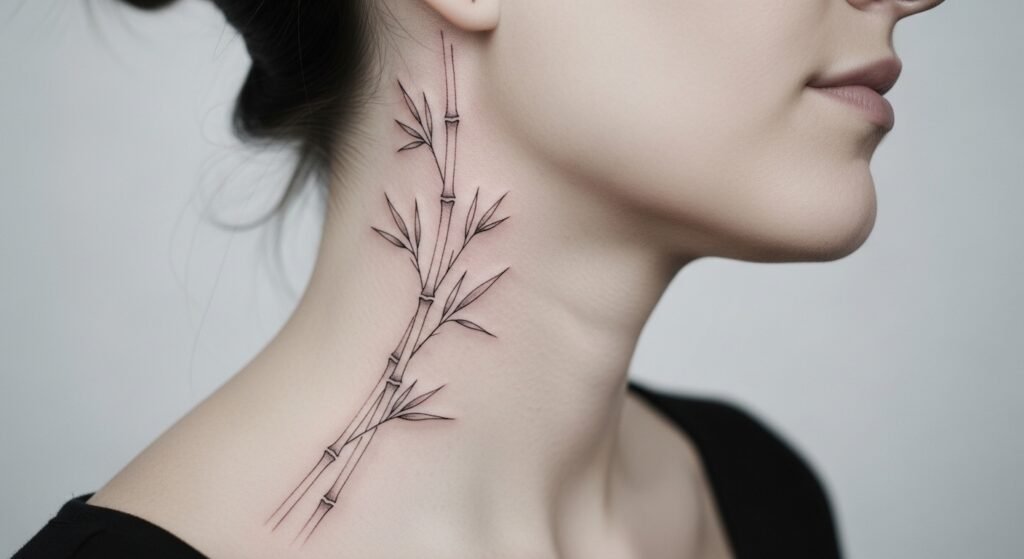
Neck placement is highly visible and not for everyone. Best for minimalists with confidence. Pain is sharp. Can connect subtly into upper back or shoulder compositions.
Best for: Neck | Minimal confidence | Clean aesthetic
11. Blackwork Oni Mask With Heavy Shadow on the Forearm
Deep black fills define an Oni mask with exaggerated features and intense expression. Negative space highlights teeth and eyes, creating a dramatic contrast-heavy design.
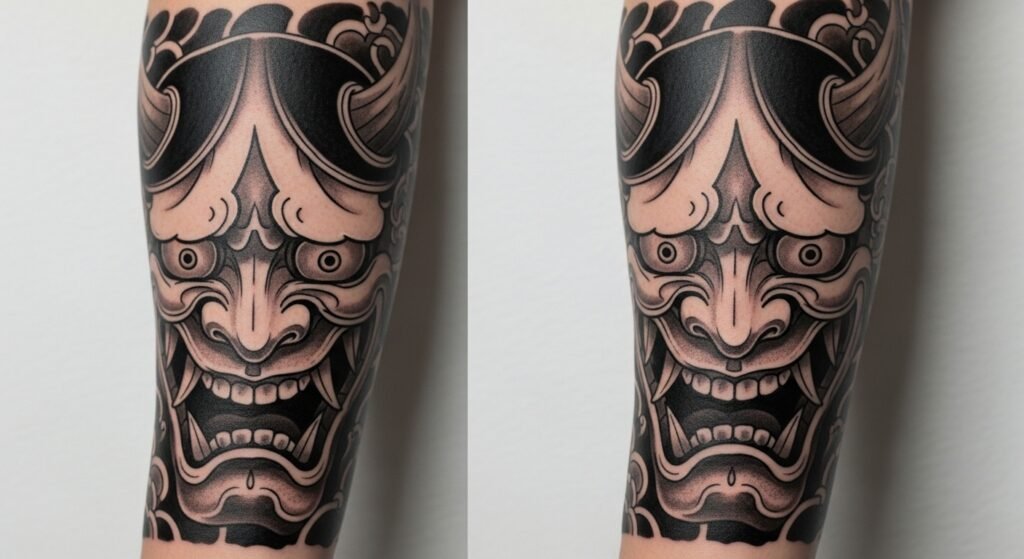
Forearm placement maximizes visibility and storytelling. Pain is moderate. Can expand into a traditional Japanese tattoos men sleeve with flames or clouds.
Best for: Forearm | Intense personalities | Sleeve builder
12. Geometric Crane in Flight Across the Upper Arm
A crane is broken into geometric segments, combining sharp angles with flowing motion. The contrast between rigid structure and organic flight creates visual tension.
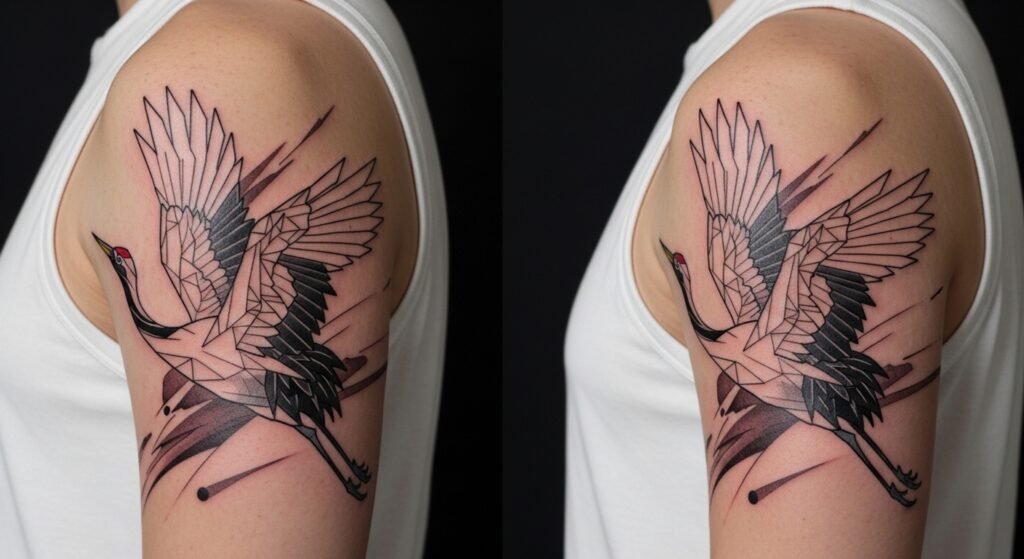
Upper arm placement allows motion to follow muscle lines. Pain is low to moderate. Can integrate into larger Japanese tattoos ideas with sky or cloud elements.
Best for: Upper arm | Balanced thinkers | Modern edge
13. Illustrative Cherry Blossom Branch Across the Chest
Soft shading and detailed petals create a branch that stretches horizontally across the chest. The composition feels calm, with negative space emphasizing fragility.
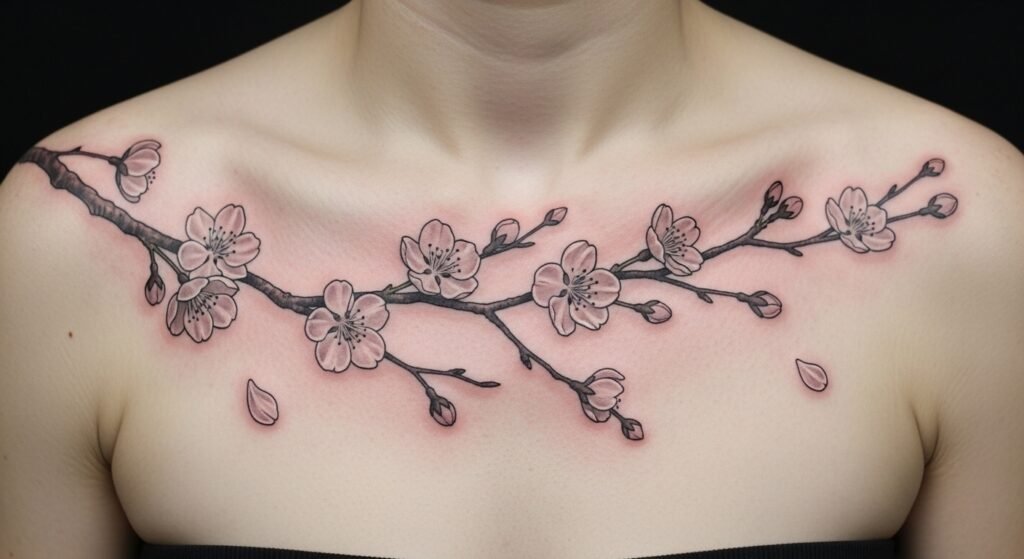
Chest placement keeps it personal yet expandable. Pain is moderate to high near sternum. Can connect into sleeve or shoulder designs.
Best for: Chest | Subtle personalities | Elegant flow
14. Traditional Wave and Cloud Backpiece Fragment
Bold outlines define stylized waves crashing into cloud forms, using classic Japanese composition rules. Limited color keeps it grounded in tradition.
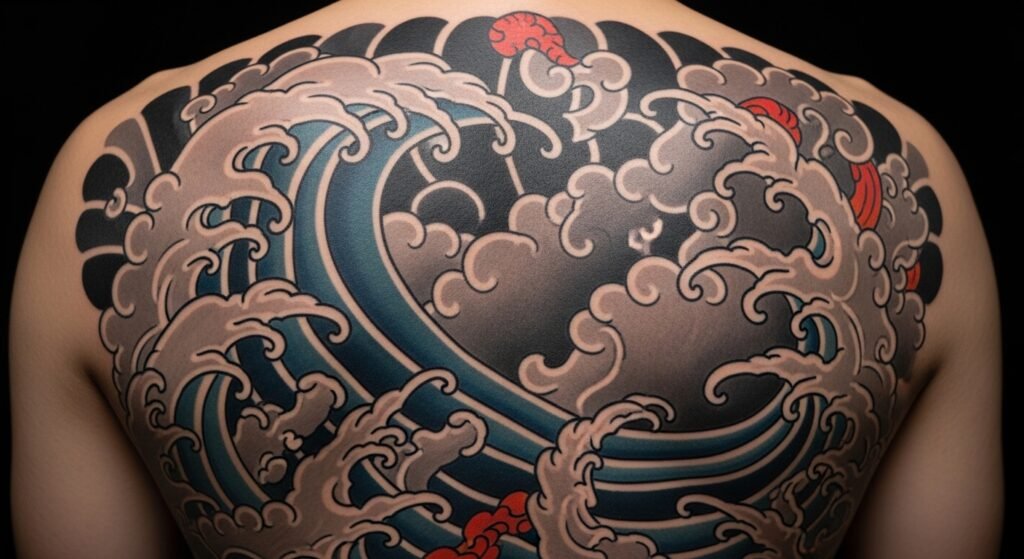
Back placement allows large-scale storytelling. Pain varies. Can evolve into full Japanese arm tattoos system.
Best for: Back | Traditionalists | Large canvas
15. Neo-Traditional Samurai Helmet on the Wrist
A kabuto helmet rendered with bold lines and controlled color accents. The design balances detail with readability at a small scale.

Wrist placement keeps it visible but compact. Pain is sharp. Can expand upward into forearm compositions.
Best for: Wrist | History-driven | Compact detail
16. Dotwork Lotus Bloom on the Hand
A lotus formed through layered dot shading creates a soft gradient effect. The design feels almost meditative, with symmetrical petal structure.
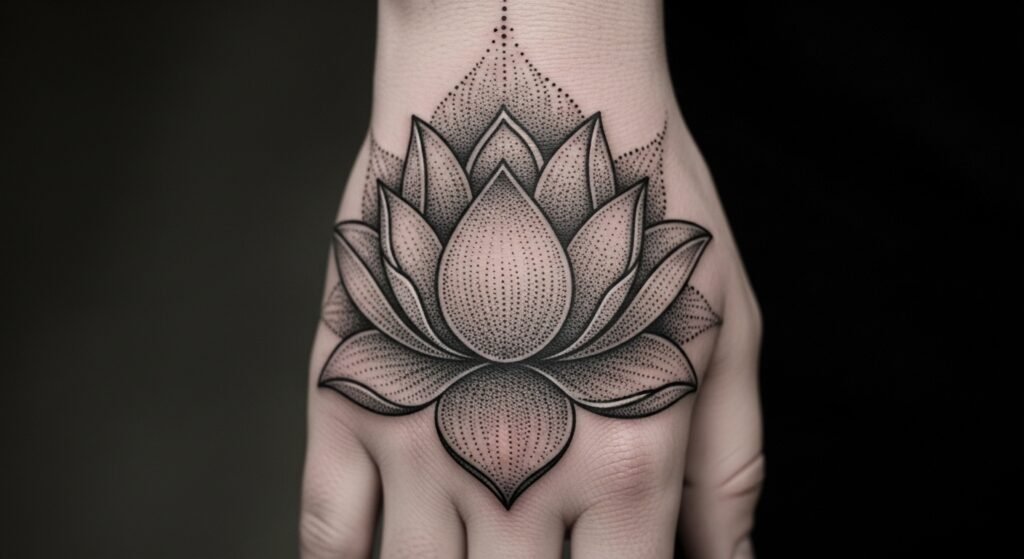
Hand placement is bold and visible. Pain is high. Works for those committed to visible ink.
Best for: Hand | Calm personalities | Symbolic meaning
17. Abstract Brushstroke Dragon Across the Shoulder
Loose, brushstroke-inspired lines form a dragon that feels painted rather than tattooed. The style mimics ink wash techniques with fluid transitions.
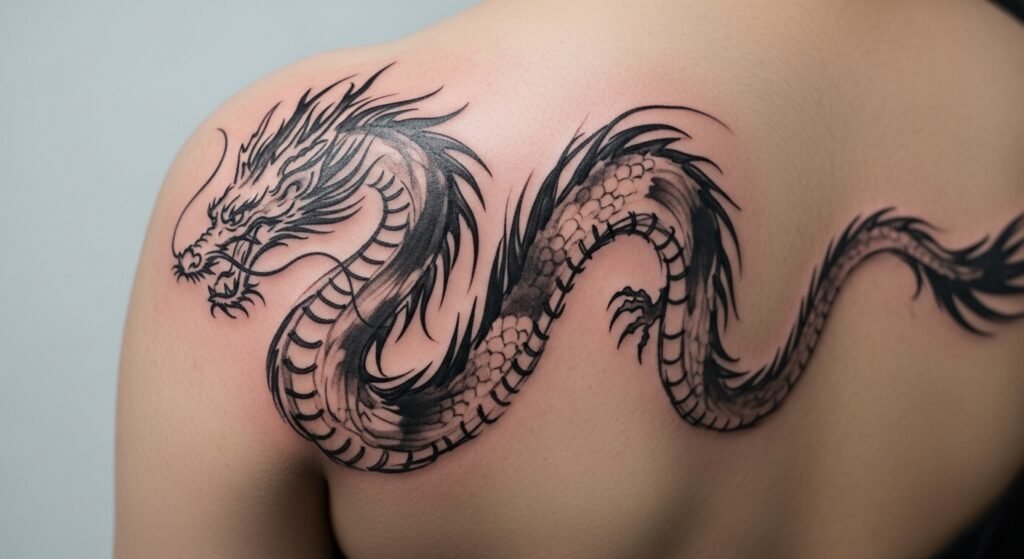
Shoulder placement enhances flow and movement. Pain is moderate. Can expand into sleeve or back.
Best for: Shoulder | Creative minds | Artistic flow
18. Realistic Samurai Portrait Along the Rib
Highly detailed portrait with layered shading and expressive facial detail. The composition uses vertical alignment to elongate the torso.
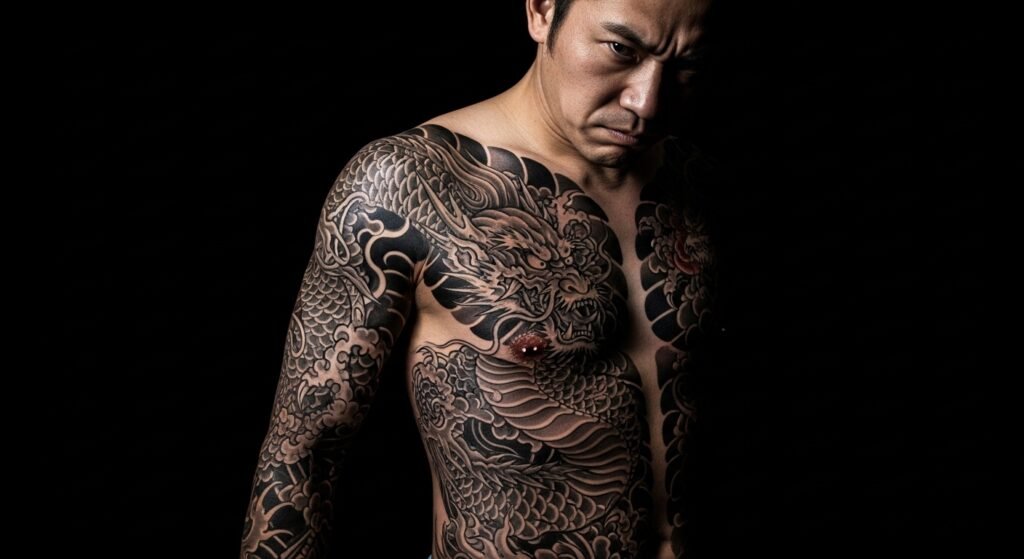
Rib placement adds drama but comes with high pain. Best for experienced collectors. Can connect into full torso piece.
Best for: Rib | Dedicated collectors | High-detail work
How to Choose the Right Tattoo Style for Your Personality
Minimalist and fine line designs work best for those who prefer subtle expression. A bamboo stalk or single koi done with restrained linework feels intentional without overwhelming the skin. These styles age well when spacing is respected.
Bold blackwork and traditional designs suit strong personalities who want visibility. A heavy Oni mask or wave composition holds its impact from across the room. These designs rely on contrast and are built to last.
Geometric and abstract styles attract those drawn to structure or artistic experimentation. A geometric crane or abstract wave pattern shows control and creativity at the same time.
Illustrative and realistic styles are for storytelling. A samurai battle scene or hyper-detailed tiger requires commitment, but delivers unmatched depth.
Symbolic designs — like lotus, koi, or phoenix — work best when the meaning is personal, not just aesthetic. The strongest Men’s Japanese sleeve tattoo always aligns visual impact with personal intent.
For additional inspiration, check out our post on Black Sleeve Tattoo Men for personal expression.
Best Tattoo Placements and What They Communicate
Forearm tattoos are direct and visible. They tell a story immediately and are ideal for designs like koi, Oni masks, or flowing waves. They age well when spacing and contrast are handled correctly.
Chest tattoos feel more personal. Designs placed here — like cherry blossoms or symmetrical geometry — can be hidden or revealed depending on context.
The back is the ultimate canvas. It allows for full narratives like samurai battles or large wave compositions. It’s less about visibility and more about scale.
Wrist and hand placements signal confidence. These are high-visibility areas, often chosen by those already committed to tattoo culture.
Upper arm and full sleeve designs offer progression. You can start small and build into a full Japanese arm tattoo sleeve, ensuring flow and cohesion over time.
What to Know Before Getting Your First Tattoo
Start by choosing an artist whose portfolio matches your intended style. If you want a traditional Japanese piece, look for artists experienced in that specific visual language — not just general tattooing.
Reference images matter more than trying to describe ideas. Bring clear visuals that show composition, shading, and style direction. This avoids misinterpretation.
Size and placement decisions are critical. Small designs with too much detail blur over time, while larger pieces hold structure. Think long-term, not just immediate appearance.
For aftercare, the first two weeks are key. Keep the tattoo clean, moisturized, and out of direct sunlight. Avoid pools, tight clothing, and anything that causes friction.
The best Men’s Japanese sleeve tattoo starts with patience — not impulse.
Conclusion
From flowing koi to full samurai compositions, the range of Men’s Japanese sleeve tattoo designs covers everything from minimal symbolism to full-scale storytelling. Each style, placement, and concept carries its own weight, and the strongest tattoos are the ones where all three align seamlessly.
Take your time with the process. Build references, study artists, and start with a placement that fits your comfort level. A well-planned tattoo doesn’t just look better — it holds its meaning and structure for years.